Ice Blue Neon Sign Ideas: The Cool Pale Glow
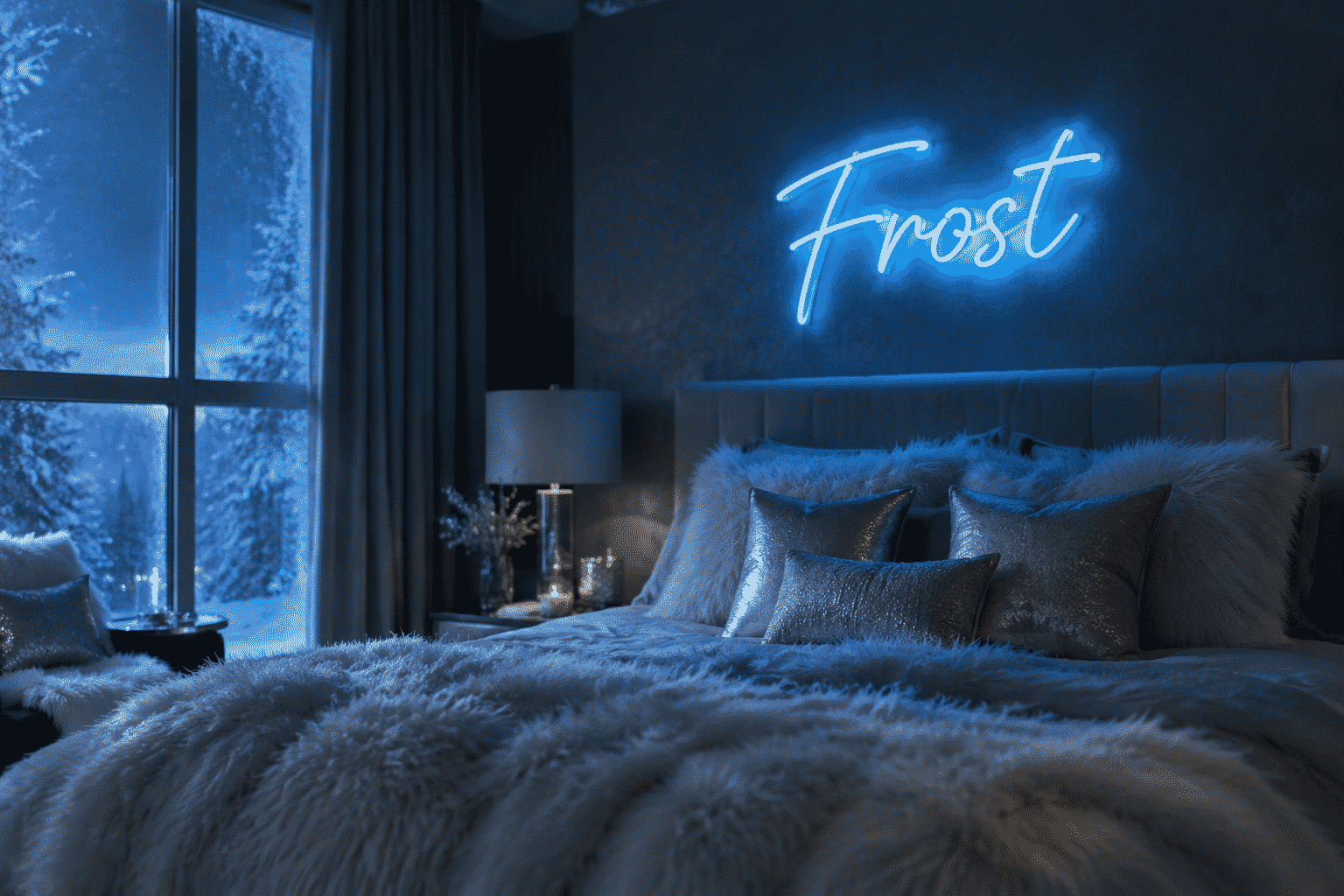
Ice blue is neon’s softest cool — the pale, airy end of the blue family that trades electric saturation for something rarer: a glow that reads as temperature. Where electric blue says “switched on,” ice blue says “cool, clean, quiet” — frozen air made visible. It’s the spa glow, the softest bedroom blue, the hotel-bathroom register — and the shade that proves pale doesn’t mean weak: an ice-blue sign at low dim produces more atmosphere per watt than almost anything in the palette.
The parent hue’s full aesthetic lives at blue neon sign aesthetic; this is the shade’s own guide — what ice blue does, where it belongs, and the formats that carry it.
What Makes Ice Blue Different
The pale-blues are a different design tool than their saturated parent:
- Temperature-first presence: ice blue communicates coolness before color — it makes rooms feel crisper and cleaner (the ice-cream-case effect)
- The gentle nightlight register: pale blue at 10–20% dim is among the most livable low glows in the palette — soft enough for sleep-adjacent use where electric blue would alert (the color-science caveat still applies: dim it lower than you’d dim warm hues)
- Daylight-friendly: unlike saturated hues that only “arrive” at night, ice blue reads properly in daylight rooms — the pastel that holds its identity with the curtains open
- Pairs without dominating: ice blue is the palette’s most mixable cool — it steps beside other hues instead of competing with them (combinations)
The Rooms Ice Blue Owns
Spa bathrooms and self-care corners. The signature use: ice blue reads as steam-cooled tile and eucalyptus — the hotel-spa register at home (damp-room ratings for bathroom installs).
Soft bedrooms. The gentle-blue sleep-adjacent look: ice script over white or pale-wood headboards — the anti-noir (bedroom placement). Pairs with linen and cream for the airy register.
Fitness and yoga corners. The cool-calm training glow: ice blue reads recovery and breath — the barre-studio register (gym color logic).
Nurseries and kids’ rooms. The pale blue that parents actually want at night: soft, dim, sky-adjacent (kids’ setups).
Coastal and Scandinavian schemes. The natural fit: ice blue against white, pale wood, and sea-glass tones — the beach-house and Nordic registers in one hue.
Gaming’s soft mode. The battlestation’s day-off color: ice blue for calm sessions where electric blue is overkill (gaming colors).
The Shade Range (Within the Shade)
Even “ice blue” spans a small but meaningful range:
- True ice blue — the pale cyan-leaning default: frozen and clean
- Powder/baby blue — the slightly warmer, softened pastel: nursery and vintage registers
- Frost/arctic white-blue — the near-white end: reads as “cold white” — the hotel-lobby register (temperature logic)
- Dusty blue — the grayed version: vintage-romantic, pairs with terracotta
The Pairings That Work
- Ice blue + white — the arctic-clean standard; maximum air
- Ice blue + warm wood — the Scandinavian balance: cool glow, warm grain
- Ice blue + silver/gray — the crisp modern look
- Ice blue + dusty rose — the pastel pairing: soft-serve romance (the pink side)
- Ice blue + mint — the double-pastel: dessert-shop freshness
- Ice blue + warm white — the layered-temperature look: both soft glows, different temperatures — a sophisticated favorite
The Sign Vocabulary in Ice Blue
- Water and wave icons: the shade’s native genre — waves, droplets, ice forms (the wave format)
- Snow and star pieces: winter vocabulary, celestial outlines
- Soft scripts: DREAM, BREATHE, calm-word vocabulary — the hue suits rest-language
- City skylines in outline: the cool-city render (skyline genre)
- Kids’ vocabulary: names and SKY/STAR words for the nursery register
- Small-format pieces: ice blue excels at desk and shelf scale — the gentle-glow category (desktop ideas)

Ice Blue vs. Electric Blue (The Fast Choice)
Electric blue for energy rooms — gaming, tech, statements (the parent guide). Ice blue for atmosphere rooms — spa, sleep, softness, daylight-presence. If the room’s materials are white and pale wood, ice; if they’re black and hardware, electric. And in bedrooms, ice blue is the blue that dim survives best.
Building the Ice-Blue Corner (Order of Operations)
- Confirm the register: spa-clean, soft-sleep, coastal-airy, or cool-modern — the shade-variant follows
- Stage the pale materials: white, linen, pale wood, sea-glass — ice blue wants light surroundings (dark walls eat it)
- Choose soft content: rest-vocabulary scripts, water icons, outlines — the hue prefers gentle formats
- Plan the low-dim life: ice blue lives at 10–20% in the evenings — set it up to spend its life there (dimming)
- Preview your word in the exact shade — pale-blue variants differ meaningfully — in the custom builder
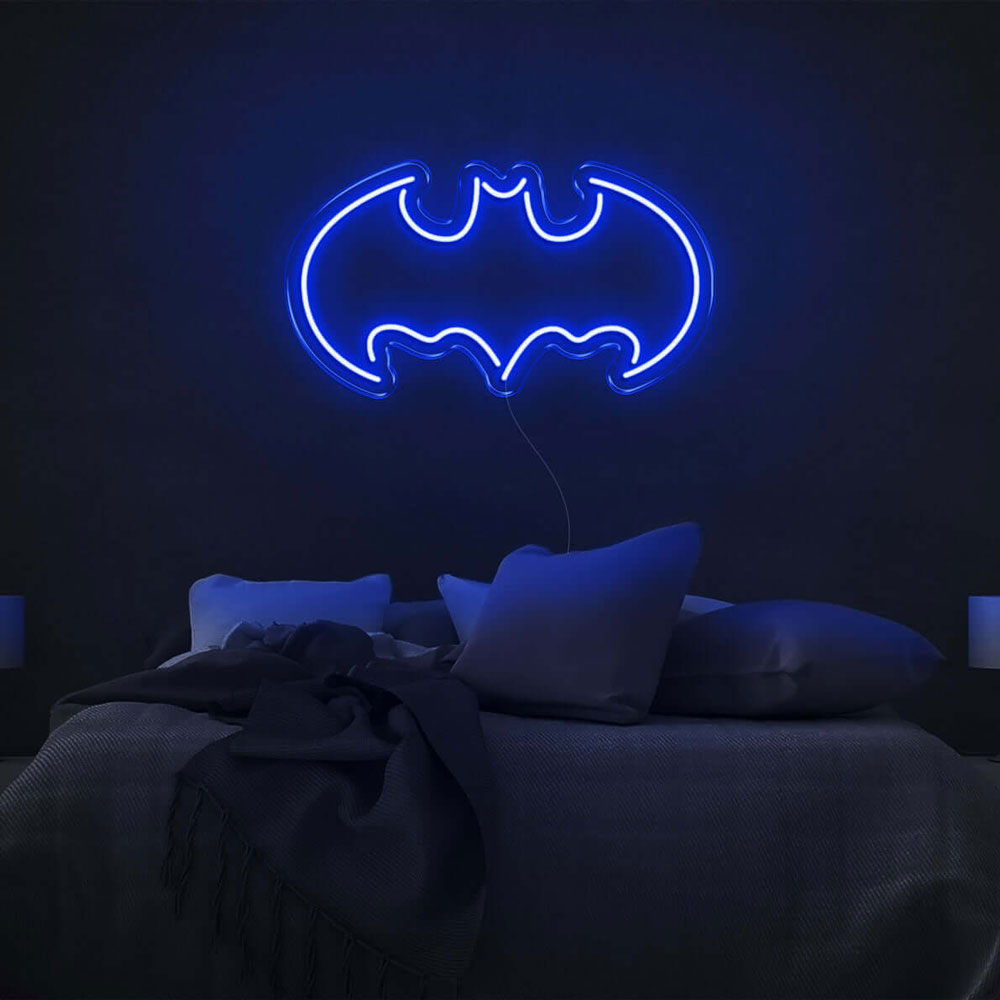
Finished examples across the blue family: blue neon sign; the whole-glow method: neon room aesthetic ideas.
The Ice-Blue Room Kit: Sources and Textures
The ice-blue aesthetic’s supporting cast — what completes the room around the glow:
The texture palette. Ice blue’s partners-by-material: white and cream linens (the airy base), pale woods (birch, ash, white oak — the Scandinavian carriers), sea glass and frosted glass (the hue’s own materials), silver and brushed metals (the crisp accents), and chunky knits in winter white (the hygge counterpoint). The materials list is the room’s half of the aesthetic (the staging logic).
The plant palette. Ice blue’s compatible greens: eucalyptus and olive tones (the gray-greens that share its muted register), white-potted trailing plants (pothos in white ceramic), and preserved mosses — avoiding the deep saturated foliage that fights the airy register (the green guide’s pairing).
The lighting ensemble. Ice-blue signs flanked by warm sources make the layered-temperature look (the temperature logic): the cool sign at low dim plus one warm lamp at 2700K — two soft glows, deliberate contrast, the sophisticated finish. All-cool rooms risk clinical; the one warm anchor humanizes.
The word-and-icon vocabulary recap. The rest-vocabulary scripts (DREAM, BREATHE, CALM), the water icons (waves, droplets), the celestial outlines (moons, stars in white-adjacent blue), and the small-format pieces where the shade excels (the full vocabulary) — the kit’s signs chosen by room role: the vanity script, the reading-corner moon, the bathroom’s spa word.
The seasonal note. Ice blue reads winter-native (the frost register) and earns summer duty in coastal schemes — the rare pastel that transitions seasons without storage (the rotation logic). In December it joins the holiday palette free of charge; in July it anchors the beach-house register.
Assemble the kit’s sign component — your words, the exact shade among the pale-blues — in the builder, previewed against white and pale-wood reference walls until the right one is obvious.
FAQ: Ice Blue Neon
What is an ice blue neon sign? The pale, airy end of the neon blue family — a glow that reads as temperature (cool, clean, quiet) before color: the spa-bathroom register, the softest bedroom blue, and the daylight-friendly pastel that saturated hues aren’t.
Is ice blue good for bedrooms? It’s the most sleep-compatible blue: soft at low dim, airy against pale headboards, and gentler than the alerting saturated blues (the science) — dim it low like any cool hue at night.
What goes with ice blue neon? White (arctic-clean), pale wood (Scandinavian), gray (crisp modern), dusty rose (soft pastel pairing), mint (double-pastel), and warm white (the layered-temperature sophistication) — ice blue is the palette’s most mixable cool.
Ice blue or electric blue — which should I choose? Energy rooms (gaming, tech, statements) take electric; atmosphere rooms (spa, sleep, coastal, daylight-presence) take ice. Dark walls and hardware want the saturated version; white and pale-wood rooms want the pale one.
What designs work best in ice blue? Water and wave icons (the native genre), snow and star pieces, rest-vocabulary scripts (DREAM, BREATHE), skyline outlines, nursery vocabulary, and small-format desk pieces where the gentle glow excels.
Do pale neon colors glow as brightly as saturated ones? Differently: pale hues read softer by nature — maximum atmosphere rather than maximum punch — which is exactly their value. Ice blue at low dim produces more mood per watt than most saturated glows manage at full brightness.
The ice-blue summary: the palette’s softest cool — temperature-first presence, the spa-and-sleep registers, the daylight-friendly pastel, the most mixable hue in the family, and the low-dim life where pale out-performs saturated (render the pale). The ice-blue room done right is quiet luxury’s glow register: cool without cold, soft without weak, the hotel-spa vocabulary at bedroom prices. Choose it for atmosphere rooms and let the saturated electrics serve the energy ones. Is ice blue the same as baby blue neon? Close cousins with different registers: ice blue leans pale-cyan (frozen, crisp — the spa register) while baby/powder blue leans slightly warm-soft (the nursery and vintage register). The rooms differ accordingly — ice for clean-modern schemes, baby for comfort schemes — and both share the pale-family virtues: daylight presence, low-dim livability, and mixing kindness (the shade range).
What color walls go with ice blue neon? White and pale-wood walls (the Scandinavian standard — the pairings), light grays (crisp modern), soft sea-glass greens (coastal), and cream (the vintage-soft register). The wall to avoid: saturated darks — they eat the pale glow’s airy virtue and convert the hue’s temperature into dimness; dark rooms wanting cool run electric blue instead.
Sources & Further Reading
- Neon sign (Wikipedia) — the consolidated public record of neon-sign history and technology.