Vintage Neon Signs: Buying, Restoring, Collecting
The vintage neon world runs on two tracks that share a look and nothing else: true vintage — real porcelain-and-glass signs from the golden age (1923–1970), traded as collectibles from hundreds to tens of thousands of dollars — and vintage-style — new LED signs built with retro scripts and warm glows, $80–300, hanging over home bars everywhere. Both tracks are legitimate; they’re just different products with different buyers, and the first skill in either market is knowing which one you’re standing in.
This guide covers both: reading the true-vintage market (authenticity, condition, price drivers, where the real pieces trade) and getting the retro look honestly (the new-build route, and when that’s the right answer). The deeper collector material — valuation method, restoration economics, display and care — lives at the collecting guide and the antique deep-dive.
The Two Tracks, Named
True vintage: signs actually made in the medium’s first fifty years — porcelain enamel faces with exposed glass neon, or all-glass script pieces from the 1930s–60s. Provenance, condition, and rarity drive four-figure-plus pricing; the best pieces trade at specialist auctions. These are antiques with electricals.
Vintage-style (new build): contemporary LED signs in retro vocabulary — script fonts, arrows, warm white/red glows, art-deco frames. The look without the fragility, mercury uncertainty, high-voltage transformers, or five-figure invoices. This is what the overwhelming majority of “vintage neon” searches actually end up buying — the retro aesthetic guide covers the style language.
Track One: Buying True Vintage
Where the real pieces trade, in order of seriousness: specialist sign auctions (the venues where collections disperse — Richmond Auctions and peers), dedicated dealers (porcelain-and-neon specialists with inventories and reputations), eBay’s vintage category (real pieces mixed with reproductions — the verification burden is yours), estate and barn finds (the romance channel, priced accordingly unpredictable), and swap meets where the collecting community recirculates inventory.
The five price drivers:
- Brand and graphics — recognizable national brands with characterful artwork lead; regional oddities and plain text trail (brand collectors are the market’s engine)
- Condition — original everything, working or restorable, commands multiples of “as-found” condition
- Rarity — single-location shop signs, short production runs, unusual formats
- Provenance — documented history (photographed in situ, known installations) adds real value
- Size and display-ability — pieces that fit in homes outprice warehouse-scale spectaculars per dollar of visual impact
The authentication checklist (the fast version — the full method at antique neon signs):
- Porcelain tells: genuine porcelain enamel has depth and glass-smooth surface with chips showing layering; modern paint/replicas read flat
- Construction marks: date stamps, maker marks (Eggemeyer, Veribrite, and the porcelain houses), mounting hardware consistent with era
- Tube authenticity: golden-age glass is hand-bent with irregularities; modern replacement tubes are suspiciously perfect (fine — labeled as restored)
- Transformer era: period-correct vs. modern replacements — which matters for value and matters inversely for safety (old electricals should be re-wired before use, period)
Working vs. non-working: in true vintage, non-working is normal and priced in — the tubes can be re-pumped and transformers replaced (repair economics). Buy the porcelain and graphics; budget the electricals separately. But pre-1970s blue/white glass may carry mercury fills — have restorers handle those, and treat breakage protocols seriously (the chemistry).
Track Two: The Honest Retro Look (New Build)
For most rooms, most budgets, and every rental: the vintage look is a design brief, not an antique hunt.
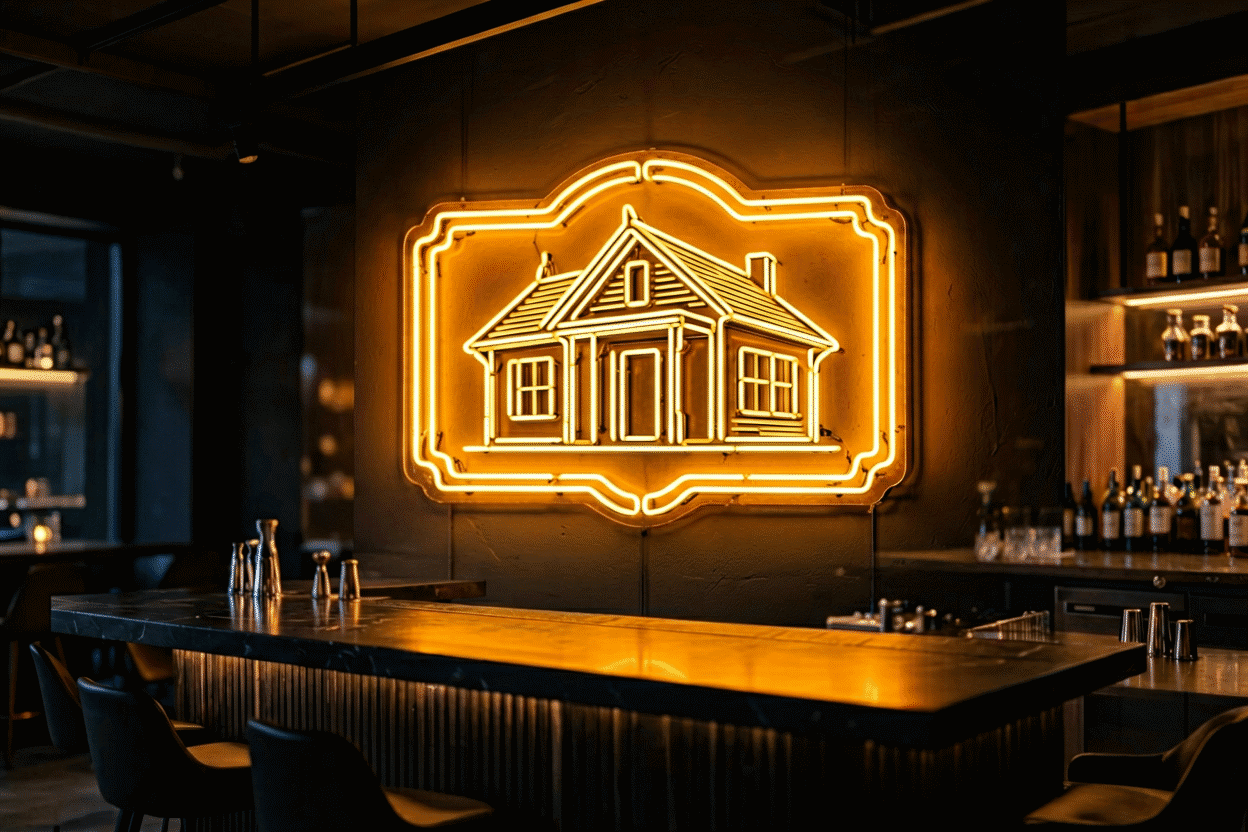
- The vocabulary that reads “vintage”: script fonts (the cursive diner register), warm colors (red, amber, warm white — the golden age’s actual palette, because early neon was mostly red-family), arrow motifs, and “MOTEL / DINER / OPEN” vernacular words
- The modern advantages: LED builds are dimmable, safe, cool-running, cheap to run, and don’t carry century-old wiring (the comparison)
- The honest displays: a new-build script over a home bar delivers 90% of the vintage mood at 3% of the cost and none of the fragility — see bar ideas and the man cave collection
The one warning from the market’s seam: “vintage” is unregulated in listings. New LED signs get listed as vintage-style (fine, honest), and reproductions get listed ambiguously (less fine). The words “hand-blown glass,” “porcelain,” “original,” and a maker’s name are the load-bearing claims — everything else is atmosphere.
Choosing Your Track (The Decision Table)
| You want… | Track | Budget |
|---|---|---|
| An antique, the hunt, investment potential | True vintage | $500–25,000+ |
| The look over your bar, this month | Vintage-style LED | $80–300 |
| A specific dead brand’s sign glowing again | True vintage + restoration | Piece + $200–800 electricals |
| Retro mood with zero maintenance | Vintage-style LED | $80–300 |
| Museum-grade display | True vintage via specialist auctions | Four figures and up |
Restoring: The Middle Path
The third purchase is the broken-but-beautiful piece — porcelain intact, glow long dead. The restoration reality: glass shops can re-pump tubes and rebuild transformers ($200–800 typically, per the repair cost guide), and good restorers label their work (restored-vs-original affects collector value both ways — honest restoration documented properly protects it). The decision framework for restore-vs-display-dark-vs-sell lives in the collecting guide.
The Look, Compressed
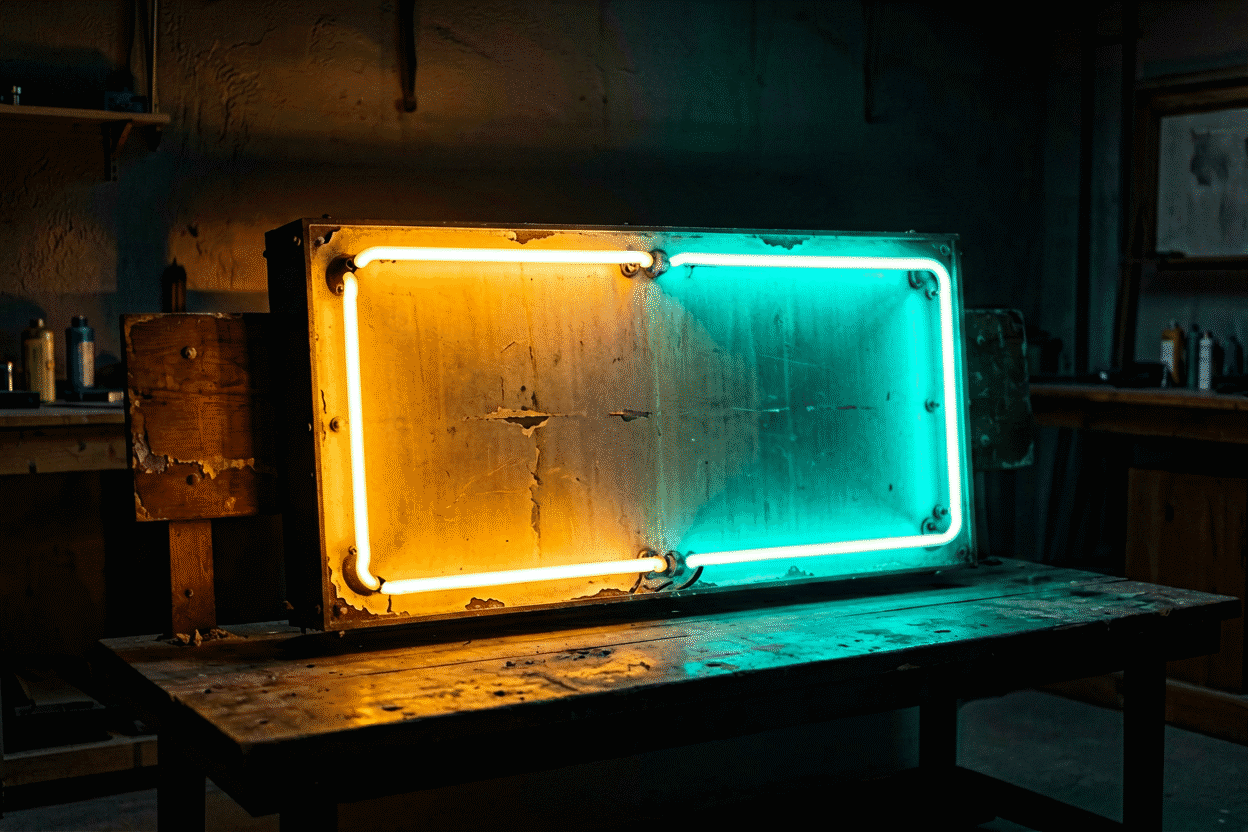
Whether the glass is ninety years old or nine months, the vintage neon aesthetic is a narrow, reliable vocabulary: warm glow against dark or wood surfaces, script or arrow graphics, and words from the roadside vernacular. The era that vocabulary comes from is traced at history of neon signs — and the version you can commission with your own words on it starts in the custom builder, retro fonts included.
The Market’s Current State: A Buyer’s Snapshot
Where the vintage market stands, practically, for someone entering it today:
The price regime. The 2020s have been strong for authentic pieces: brand porcelain in original condition that traded in the low hundreds a generation ago now commands four figures, with the exceptional tier at auction reaching five (the valuation method). The drivers are standard mature-collectible economics: fixed supply (the golden age stopped producing), thinning availability (museum absorption and completed collections), and broadened demand (design-market appreciation of the aesthetic).
What’s still findable at entry prices. The honest list: postwar regional pieces with graphics charm but no brand premium ($200–600 in honest condition), “project” signs — sound porcelain, dead electricals — priced for restoration budgets (the restoration math), and odd formats (interior signs, door pushes, smaller scripts) that escaped both the scrap drives and the collectors’ main attention. The entry tier rewards theme- and typography-driven buyers more than brand-driven ones — the opposite weighting of the top market.
The condition market’s split. Original-and-working commands the peak premium; original-and-dark follows close behind (collectors price the electricals as a restoration line-item); restored pieces trade at honest discounts to original with documentation papering the gap (the restoration ethics). The “working premium” is real but modest — these are objects first and lights second.
The reproduction pressure. Quality fakes have improved (aged patina, convincing porcelain-look finishes), making the authentication markers — construction logic, maker marks, the anachronism test — the entry-level collector’s genuine edge (the authentication method). The market’s honest defense: buy through channels where provenance is part of the price (specialist auctions, established dealers) while learning; graduate to the open market (eBay, barn finds) as the eye trains.
The adjacent play. For buyers who want the era’s look without the antique economics: the vintage-style new-build tier (the retro vocabulary) delivers the aesthetic at consumer pricing — and, increasingly, holds its own as the design-forward option rather than the compromise. The two markets cooperate: today’s new-build collectors are tomorrow’s antique bidders, which is how the pipeline has always refilled.
FAQ: Vintage Neon Signs
What counts as a vintage neon sign? True vintage means golden-age manufacture — roughly 1923–1970, porcelain-and-glass or all-glass construction, hand-bent tubes. “Vintage-style” means new LED signs in retro vocabulary. Listings blur the two constantly; construction and provenance are the truth-tellers.
How much are vintage neon signs worth? From a few hundred dollars for common pieces in rough condition to five figures for rare brand porcelain in original condition — driven by brand graphics, condition, rarity, provenance, and size. Specialist sign auctions are the price-discovery venues.
Where can I buy real vintage neon signs? Specialist sign auctions, dedicated dealers with inventories and reputations, eBay’s vintage category (verification burden on you), estate sales, and swap meets. The collecting guide maps the channels and their trade-offs.
Are old neon signs safe to use? After electrical restoration, yes — but never run unrestored century-old transformers and wiring. Have tubes re-pumped and electricals rebuilt by sign professionals, and treat pre-70s blue/white glass as possibly mercury-bearing.
Can you still get the vintage look without buying antique? Yes — that’s the vintage-style LED track: retro scripts, warm glows, arrow motifs, and roadside-vernacular words, built new at $80–300 with dimming, safety, and none of the fragility.
Do vintage neon signs use a lot of electricity? Original glass pieces draw like incandescent lighting per tube-foot — noticeable if you run them nightly; restored pieces can upgrade to efficient transformers. Modern LED versions draw almost nothing (the math).
The Vintage FAQ, Extended
Can I convert a vintage neon sign to LED? Technically possible, categorically discouraged for valuable pieces — the conversion replaces the sign’s defining technology and destroys the authenticity the market prices (the value drivers). The honest alternatives: restore the original glass (the value-preserving path (the restoration economics)), display the piece dark, or buy a new vintage-style LED build for the glow and let the antique be an antique. For worthless-but-sentimental pieces with dead glass, conversion is a personal call — but know you’re converting the artifact into a replica of itself.
How do I verify a vintage sign’s age before buying? The four-marker method runs in order: porcelain and paint technology, maker and date marks, construction logic, and typography against the era curves (the dating guide) — plus the honest dealer’s documentation and the anachronism test for anything suspicious. Buy unverified glass through shipping channels never; the verification burden is the price of the open market.
What’s the entry budget for true vintage? Realistic 2026 entry: $200–600 for postwar regional pieces and project-condition finds (the tier table), plus restoration budgeting if glow is the goal. The golden-age porcelain tier starts near four figures and climbs — the entry door is the lower tiers while the eye trains (the collecting system).
Sources & Further Reading
- Cleaning Up a Broken CFL (U.S. EPA) — the federal mercury-spill cleanup procedure; we mirror it for broken glass-neon tubes.
- Solid-State Lighting (U.S. Department of Energy) — DOE reference on LED efficacy and lifetime.
- Neon sign (Wikipedia) — the consolidated public record of neon-sign history and technology.
- Mercury (U.S. EPA) — federal guidance on mercury exposure and safe handling.
Pricing based on CustomNeon’s current catalog (2026); custom quotes come live from the sign builder.