Hotel Neon Sign Ideas: Vacancy, Welcome, Night Glow
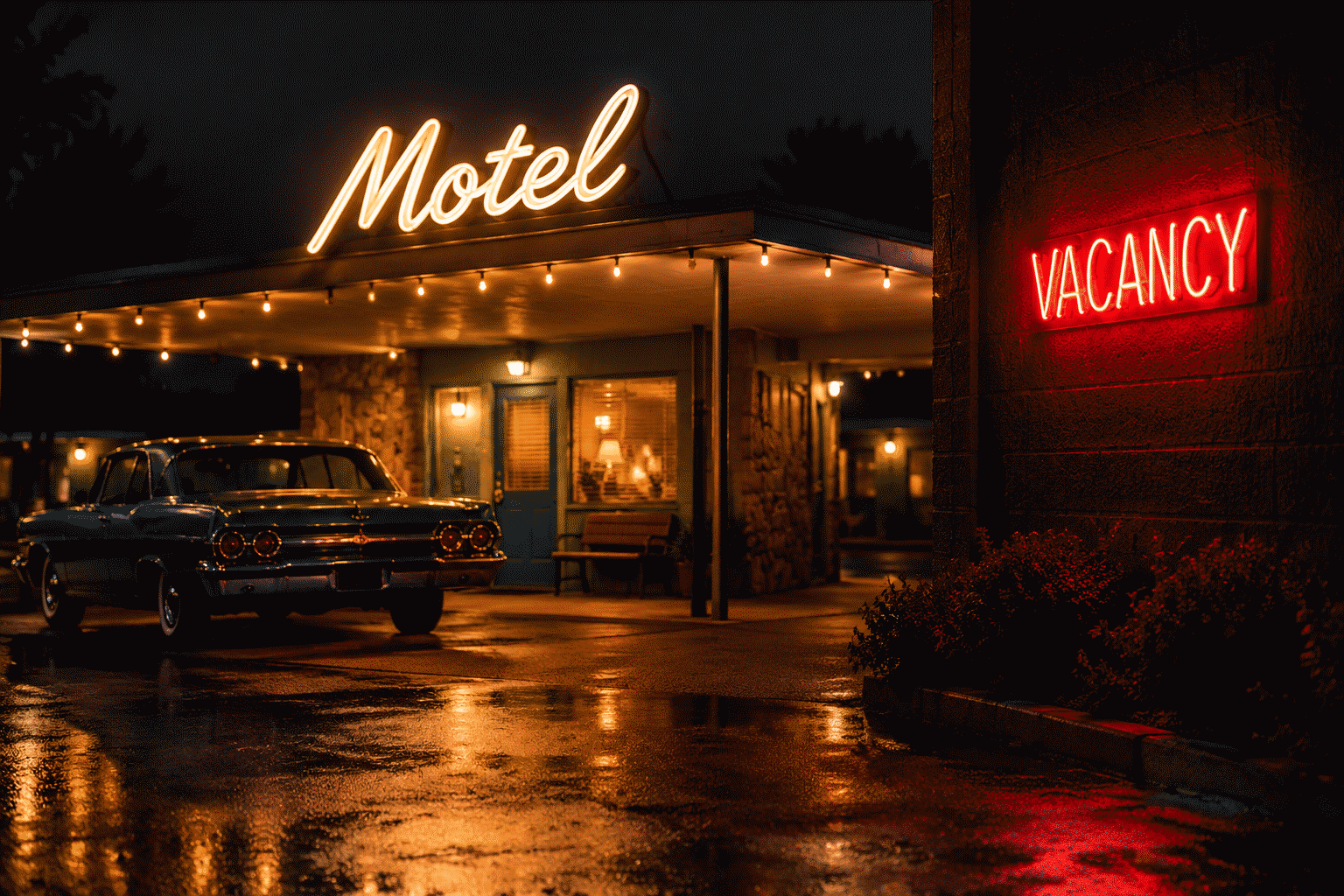
For forty highway years, the neon hotel sign was the most trustworthy object in America — the Vacancy light that meant a bed existed at the end of an exhausted day, the animated arrow that meant the pool was warm, the fifty-foot desert marquee that meant civilization. The lodging industry ran on tube light before almost any other industry did, because its product is sold at night, at speed, to strangers.
The modern version runs two tracks: the roadside heritage register (motels keeping the faith) and the interior design register (hotels using neon’s warmth as lobby language). This guide covers both — the icon set and its meanings, the interior deployments, the palette, and the custom route.
The Vocabulary: What the Classic Signs Said
The lodging register has one of signage’s richest vocabularies, and every word carries history:
- VACANCY / NO VACANCY. The register’s core pair — the flip-flop message that defined the road-trip era. The piece’s power was its honesty: the light that was on was the truth. Our No Vacancy design carries the modern version, and the word’s full meaning and history is covered in its own guide — the roadside’s most eloquent two words.
- WELCOME. The lobby’s handshake — the first word of hospitality, in script, at the entrance. The welcome ideas guide covers the full register; hotels and inns run it at the door, the desk, and the lobby wall.
- HOTEL / MOTEL / INN. The identity words — the big pylon and marquee pieces that named the place. “INN” is the register’s warmest member (the word chose its connotations centuries ago); “MOTEL” is the purest mid-century artifact (the word itself was coined for the motor-hotel).
- AIR COOLED / COLOR TV / POOL. The amenity era’s vocabulary — the extinct register (“air cooled” glows nowhere now) that makes vintage pieces so collectible. The modern equivalents (the wifi-tier) glow in nobody’s memory yet; the classics still do.
The Roadside Heritage Register
The motel keeping the faith — and the Airbnb and boutique inn borrowing the look:
- The marquee. The roadside piece: the name large, the vacancy line beneath, the arrow if the driveway needs it. The heritage builds run the red register (the era’s working color) with the modern LED reliability underneath.
- The vacancy switch. The two-piece system (VACANCY / NO VACANCY, one lit at a time) is the honest build — the modern version runs one piece with a dimmer doing the switch’s job, or the classic pair for the full heritage effect.
- The retro-boutique tier. The design-led inns and Airbnbs running the motel aesthetic deliberately: the script name, the pool-side piece, the “AIR COOLED” joke. The register’s revival runs on nostalgia for the era’s optimism, and the pieces are the fastest way a property says “this place has a sense of humor about itself.”
The Interior Register: Where Neon Works Inside a Property
The modern hotel’s use of glow as lobby language — the design logic that turned a signage medium into a hospitality medium:

The front desk. The check-in moment’s warm light: the property’s name or a hospitality phrase behind the desk, at conversation brightness. The piece replaces the corporate lightbox with warmth — the lobby’s first impression at 30% output.
The lobby lounge. The evening register: a phrase piece over the bar corner, dimmed with the evening. The hotel lobby’s neon does its best work at the hours guests actually linger — the 8 p.m. to midnight lobby is a different room than the 8 a.m. one, and the glow is how it changes clothes.
The corridor and stair tiers. The wayfinding warmth: small pieces at the corridor turns and stair landings — the overnight glow that replaces (or softens) the emergency-lighting cold. The hospitality trick: light the paths guests walk at 1 a.m. with something kinder than fluorescents.
The in-room tier. The room’s amenity piece: the wall phrase in the boutique room (“STAY AWHILE,” the city’s name in script), the poolside piece, the rooftop bar’s sign. The register where hotels spend design money — and where the custom route serves the boutique properties that want one-of-one pieces.
The restaurant and event tier. The property’s restaurant runs its own signage logic (our restaurant guide covers it), and the event spaces run the phrase pieces — the wedding-and-banquet tier that rents by the night.
The Roadside Memory (Why the Register Still Sells)
The lodging sign’s cultural weight comes from a specific American chapter, worth knowing because it is what every modern deployment borrows:
The postwar highway boom built thousands of independent motels, each competing at 55 miles per hour for the same passing driver. With no brand budgets, the motels competed in light: taller pylons, animated arrows, blinking vacancy signs, the desert-route arms race that turned whole strips into corridors of glow. Route 66 and the Vegas Strip are the register’s famous endpoints, but the look ruled every commercial strip in America – the mom-and-pop marquee was the small business’s only broadcast tower.
The interstate bypasses killed the golden age (the strips the highways skipped, died), and the chains replaced the independents’ neon with corporate lightboxes. What survived was the memory: the roadside glow became the aesthetic of road trips, nostalgia, and Americana – the reason a modern boutique inn hangs script and a collector pays four figures for a 1962 vacancy pair. The register sells the memory of being welcomed, which is exactly what a lodging business still wants to promise.
The Palette
- Red. The heritage register — the roadside era’s working color, and still the vacancy tier’s default. The full behavior in the red guide.
- Warm white. The hospitality register — the lobby’s candle-tier, the palette of modern hotel design. The color that says “someone thought about your 11 p.m.”
- Blue and teal. The pool-and-midnight register — the motel-sign era’s cooling color, the poolside piece’s native hue.
- The script standard. Lodging runs script more than any commercial register except bars — the cursive “Welcome,” the flowing property name. The lettering carries the register’s whole personality: unhurried, personal, pre-corporate.

The Custom Route
The fan-styled custom tier for properties and homes alike:
- The property name in script — the one-of-one marquee, priced by width in the custom builder.
- The hospitality phrases — “STAY AWHILE,” “WELCOME TRAVELERS,” “ROOM FOR ONE MORE” — the lobby and guest-room tiers.
- The heritage pair — VACANCY / NO VACANCY as the two-piece system, the collector’s build.
- The house version — the register’s biggest modern market: the home that wants the inn feeling. “GUESTS WELCOME” at the guest-room door, the family name + “INN” at the entry — the hospitality register, domesticated.
FAQ: Hotel and Motel Neon Signs
Where can I buy a hotel or motel neon sign? The custom route builds any piece in the register — property names, the vacancy pair, the hospitality phrases, live pricing in the custom builder. Vintage roadside pieces surface through collector channels at premium prices, with the standard old-glass service math.
What does a NO VACANCY sign mean? The roadside era’s flip-side message: rooms full, keep driving. The two-word pair defined motel-row communication for decades — the full history is in our No Vacancy guide, and the ready design carries the modern version.
How do hotels use neon in interior design? As lobby language: the front desk’s warm name-piece, the evening lounge phrase, the overnight corridor glow, the in-room amenity piece. The register’s interior logic is warmth at the hours guests linger — covered room by room above.
What color for a hotel sign? Red for the roadside heritage register, warm white for the modern lobby, blue and teal for the pool and midnight tiers. Lodging runs script more than any register except bars — the cursive carries the personality.
How much does a hotel neon sign cost? Script name pieces run $150-$300 by width; the hospitality phrases $100-$200; the vintage-pair builds $250-$400. Properties typically spend on one anchor (the name) and layer the phrase pieces from there.
How much does a vintage motel sign cost? Genuine roadside pieces trade as architectural salvage and collector Americana – documented marquees run from high hundreds into five figures, with the famous routes’ pieces at the top of the range. The honest middle: vintage-style LED reproductions at $150-$400, which carry the look without the salvage logistics (a real pylon sign is a crane-and-permit project, not a decor purchase).
Can I use a motel-style sign at home? The register’s biggest modern market: the guest-room “GUESTS WELCOME,” the entry-hall family name + INN, the pool piece. The hospitality vocabulary domesticates beautifully — your house, the inn. The welcome guide covers the entry tier.
Light the Vacancy
The lamp that meant a bed, the word that meant stay. Heritage marquee or modern lobby warmth — build the piece and put out the light.
More lodging glow: the No Vacancy history, welcome ideas, open sign guide, restaurant walls.
Sources & Further Reading
- Neon sign (Wikipedia) — the consolidated public record of neon-sign history and technology.
Pricing based on CustomNeon’s current catalog (2026); custom quotes come live from the sign builder.