16 Podcast Studio Neon Signs That Frame the Show
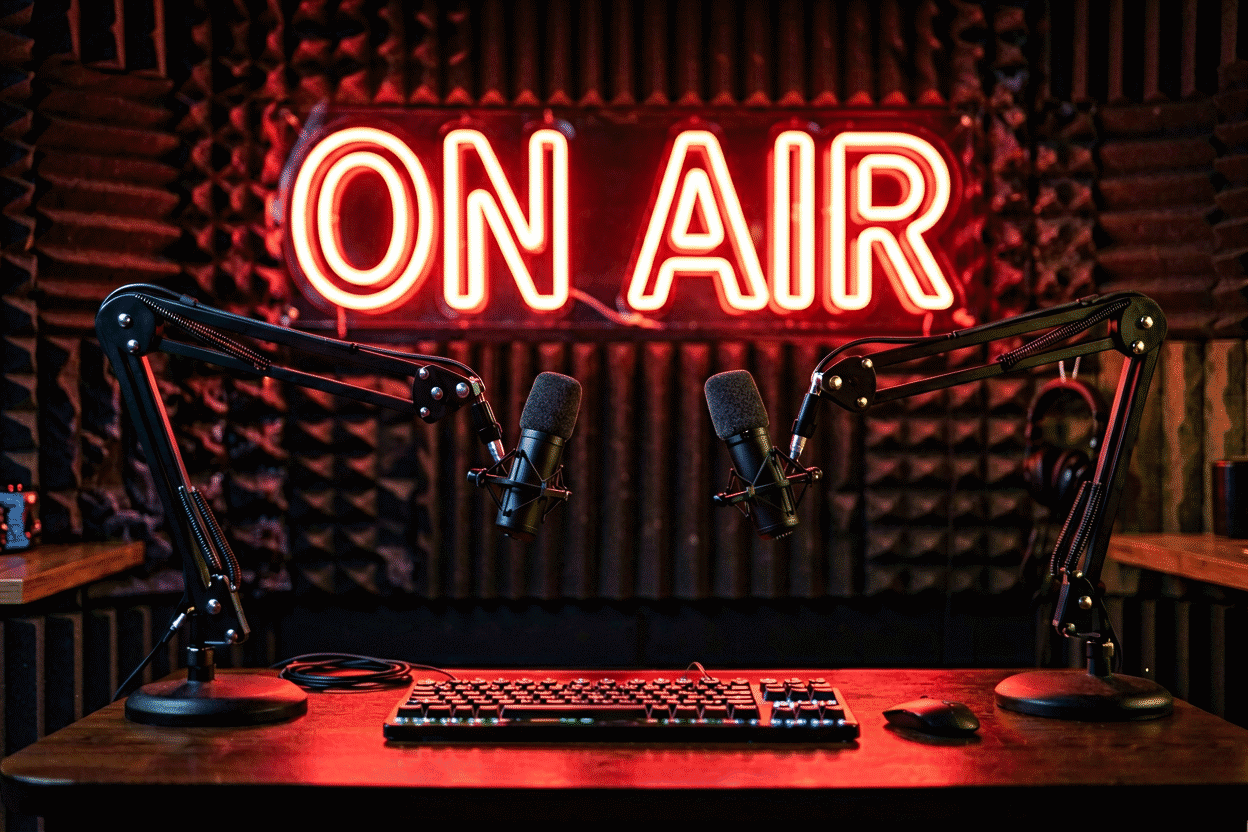
Every podcast video is two things: the conversation and the frame around it. The audio quality comes from the mic and the room treatment, but the look — the thing that makes a thumbnail work and a channel feel produced — comes from the wall behind the hosts. That wall is why podcast neon is its own category: the sign isn’t decoration, it’s set design that appears in every episode forever.
Here are 16 ideas organized by the jobs a podcast wall does, from the show’s nameplate to the composition rules that keep two talking heads looking intentional. The broader studio canon lives at gaming room neon signs — the crossover tier — and the streamer systems guide covers the live-broadcast branch.
The Show’s Nameplate: Ideas 1–4
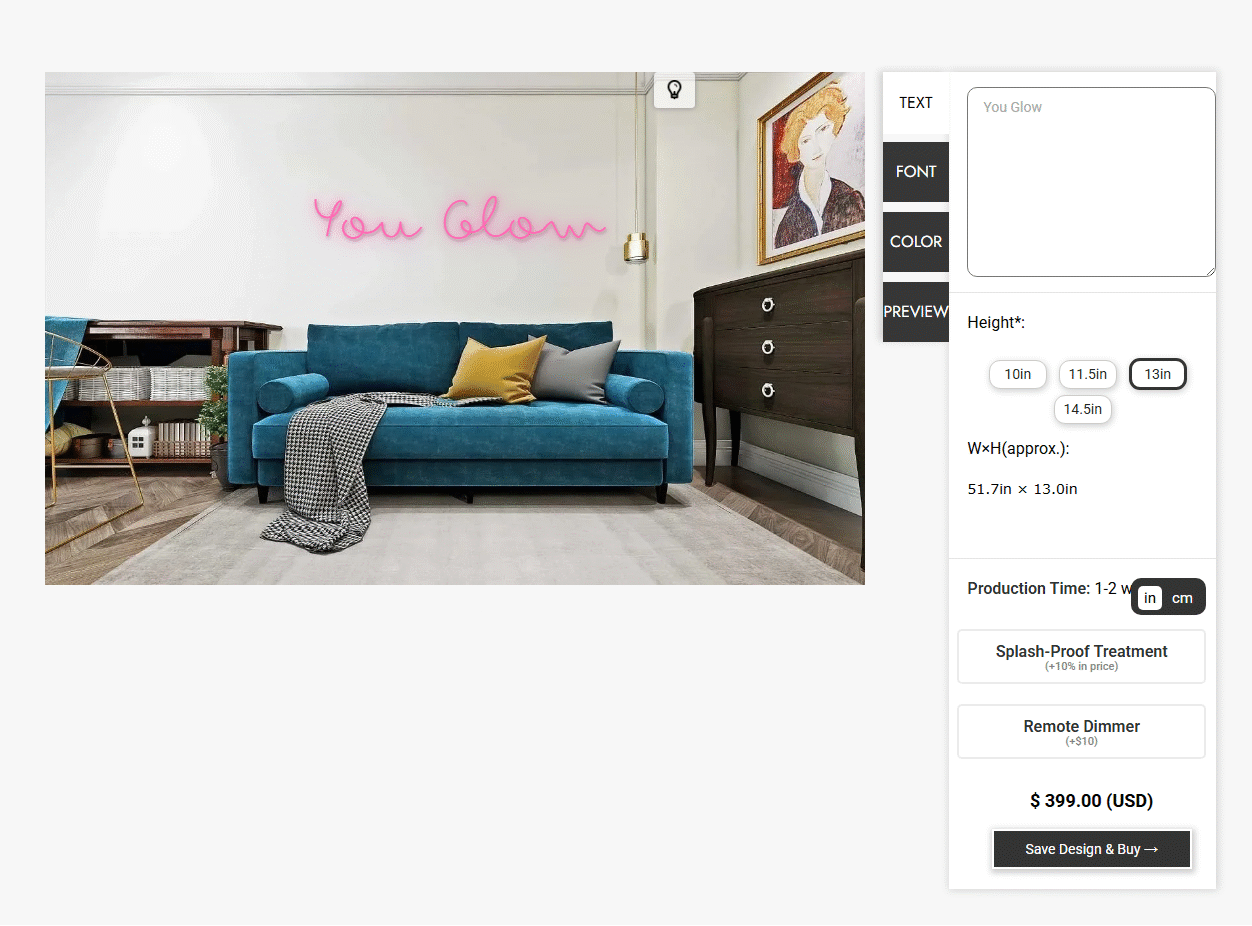
- The show’s name in its logo font — the flagship build: the title card that appears in every episode and every thumbnail. One sign does the branding work of a season of motion graphics; every name previews free in the customizer.
- The show’s logo or icon — the mascot, the waveform, the object your show is named after; one neon shape that reads at thumbnail size.
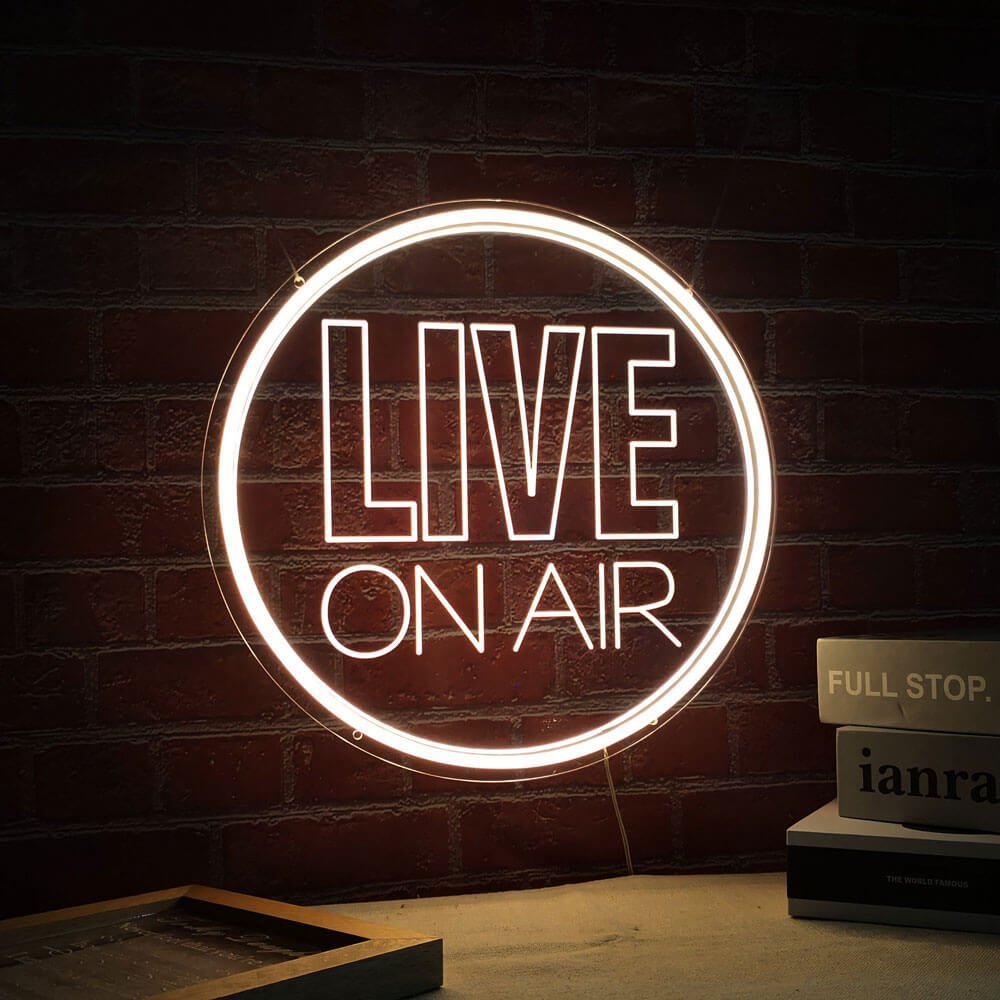
- “ON AIR” — the studio’s working light (the broadcast classic, heritage tier here): red means recording, and it keeps the door, the family, and the co-host honest.
- “Season [N]” or “Episode 100” — the milestone pieces; the tier that gets flipped on for the clip and stays lit for the archive.
The Set Layer: Ideas 5–9
The pieces that make the room read “studio” instead of “spare bedroom.”
- The shelf-back glow — neon behind the shelf of books, awards, and gear; the depth trick that gives a flat wall parallax in a two-camera setup.
- The dual-host symmetry — matched pieces flanking each seat: two vertical signs, two shapes, or a split phrase that only completes when both hosts are in frame. The composition the best two-hander shows converge on.
- The acoustic-panel accent — a small neon edge on the sound panels; the trick that turns necessity into set design.
- The guest-side piece — something for the interview chair’s background: the show’s city, a music register, or the topic-tier piece (a mic shape for interview shows, a ball for sports casts).
- The console-tier glow — small neon under the desk or behind the mixer: the cockpit feel for the engineer’s-eye B-roll.
The Color Systems: Ideas 10–13
- Warm white professionalism — the newsroom register: warm white script on dark walls reads produced, calm, and expensive; the safest brand-neutral there is.
- The purple creator build — purple reads “creator economy” instantly and flatters every skin tone on camera; the full case lives in the purple setup guide.
- The ice-blue tech register — blue for tech, finance, and gaming casts; crisp at 60% brightness, and it never fights the monitors (system guide).
- The two-tone show build — warm accent on the hosts’ wall, cool piece on the gear wall: one room, two moods, and the B-roll gets its own palette. Color logic per format in the business color guide.

The Engineering: Ideas 14–16
- The buzz check — verify the sign’s power supply is silent on mic before final mounting: quality LED adapters are quiet, but a cheap brick can hum at conversation-level sensitivity. Test with your gain staging, not your ears.
- The reflection map — neon glows in glasses, monitors, and glossy mic stands: mount after auditing the camera angles, not before (mechanics). The 30-degree offset behind the hosts covers most rooms.
- The session protocol — signs at 60–70% for recording, full for stills and promo shots, 20% for editing hours: one dimmer, three modes, and the power bill never notices.
The Composition Rules
The podcast wall’s single rule: the frame must survive a hundred episodes. Trend pieces age in weeks; the show’s name, the logo, and the warm-white register survive formats. The working order is nameplate first (it’s the brand), the ON AIR tier second (it’s the function), the set layer third (it’s the depth), and everything topical last and smallest — the guest-wall pieces that swap per season.

Placement serves the cameras: the namepiece mounts between or behind the hosts at head-height-plus (60–72 inches to centerline), where it appears in the two-shot without crowding either face. The symmetry pieces flank the seats at seated eye level; the shelf glow runs horizontal behind and below the nameplate to give the two-shot a horizon line. And the brightness protocol isn’t optional — compressed video amplifies glow, and the sign that looks perfect in the room can blow out in the upload; 60–70% is the broadcast standard.
The Recording Engineering: Noise, Reflection, Redundancy
The podcast studio’s neon is audio equipment first, and the audio tier runs three disciplines.
The noise floor. The studio’s whole purpose is a clean signal, and every electronic device contributes its hum to the floor. Quality LED neon’s tubes are silent; the risk component is the power supply – the cheap brick hums at conversation-level sensitivity, and the hum lands in the 50-60Hz band that every noise-reduction plugin fights forever. The discipline: buy the quiet adapters (the difference is real and small in dollars), test each piece at recording gain before final mounting (the test protocol context), and mount the power supplies away from the mic’s pickup arc – the adapter behind the sound panels hums nowhere.
The reflection geometry. The studio’s cameras define the composition: the namepiece mounts between or behind the hosts at head-height-plus (the two-shot frame), the symmetry pieces flank the seats, and the shelf glow runs horizontal behind and below the nameplate (the horizon line that gives the two-shot depth). The glasses-and-monitor audit runs at both hosts’ seated positions – the reflection ghost in the co-host’s frames is the re-mount nobody schedules.
The redundancy plan. The show must record: the sign rig that fails mid-season (the adhesive tier on a humid week, the daisy-chained power strip) takes the set with it. The professional habits: anchored mounts (the guide), independent power runs per wall, and the spare adapter on the shelf – the fifteen dollars of insurance that saves the episode where the glow wall goes dark twenty minutes before the guest arrives.
The Studio Budget by Show Stage
The starting show ($100-250): the namepiece (the brand, non-negotiable first – preview) and the ON AIR tier (the broadcast classic) – the show’s identity and its discipline. The growing show ($250-600): the set layer (the shelf-back glow, the dual-host symmetry, the acoustic-panel accents) and the engineering tier (the quiet adapters, the dimmer stack for the brightness protocol). The flagship studio ($600-1,500): the full set (the logo wall, the guest-side tier, the milestone pieces) and the professional touches (the B-roll console glow, the seasonal set rotations that keep a hundred episodes visually fresh).
The budget’s honest priority: the namepiece outperforms everything – it brands every episode, thumbnail, and clip without another decision, and it survives format changes, platform migrations, and the co-host shuffle (the brand logic runs the same case for businesses).
Variations and Pairings
The podcast canon’s variants. The word-face variants: “podcast studio neon signs,” “podcast room decor,” and “youtube studio neon” serve the tier – the video face leaning the composition pieces, the audio-only face leaning the status tier. The crossover faces: the streamer room (the streamer canon) carries the live-broadcast version; the home office (the office guide) carries the corporate version; the music room (the music canon) carries the audio-adjacent registers.
The pairing logic: the studio pairs the nameplate (the show’s brand) with the status tier (the recording discipline) – the identity and the function on separate walls. The pairings that work run the two-host symmetry and the shelf-depth glow (the composition rules); the pairings that fail run the cluttered set (five competing pieces in the two-shot) and the silent-hum gamble (the untested power supply).
The show pairing: the multi-show studio pairs each show’s nameplate on the rotation mount – the shared studio serving its programs in shifts, the sign swap running faster than the guest turnaround (the set-tier logic above).
FAQ About Podcast Studio Neon Signs
What’s the best first sign for a podcast studio? The show’s nameplate. It brands every episode, thumbnail, and clip without another decision, and it’s the one piece that survives redesigns, format changes, and platform migrations. Free preview at the customizer.
Will a neon sign make noise on my recording? Quality LED neon is mic-silent; the risk point is a cheap power supply. Test yours at recording gain before mounting (the engineering tier covers the power notes) — a quiet brick solves it permanently.
Where should the sign appear in the shot? Between or behind the hosts in the two-shot, at head-height-plus — visible, readable, never crowding a face. The placement mechanics cover the offset angles.
What if the studio is also my bedroom? The tier system was built for this: namepiece on the camera wall (it doubles as room decor), status sign door-side, shelf glow shared. At 20% the whole set becomes a night-light — the multi-role studio’s quiet bonus.
Will a neon sign hum on my podcast recording? A quality LED piece with a good power supply: no – the tubes are silent, and the adapter that matters runs quiet at conversation-level sensitivity. The risks are the cheap bricks: the bargain adapter’s hum lands in the fifty-to-sixty-hertz band that every noise-reduction plugin fights forever (the noise-floor logic above). The test protocol: record thirty seconds of room tone with the sign on, listen at your recording gain, and upgrade the adapter if anything surfaces – the fifteen-dollar fix that saves the episode. The placement completes it: the power supplies away from the mic’s pickup arc, the hum (if any) below the noise floor by distance.
The Nameplate vs the Set Layer
The podcast program’s two investments, compared:
| Decision axis | The nameplate | The set layer |
|---|---|---|
| The job | The brand (every episode’s thumbnail) | The depth (every two-shot’s parallax) |
| The budget priority | First (the non-negotiable) | Second (the studio’s polish) |
| The formats | The show’s name, the logo, the ON AIR tier | The shelf glow, the symmetry pieces, the panel accents |
| The failure mode | The wrong font (the brand’s decade) | The cluttered set (the competing pieces) |
| The engineering | The noise-floor test (the logic above) | The reflection map and the wiring plan |
| The lifespan | The show’s whole run (format-proof) | The set’s era (the refresh’s rhythm) |
The two investments’ sequencing rule: the nameplate before the set – the brand’s piece brands every episode from day one, and the set layer’s depth serves the episodes the brand already delivered (the program’s budget stages above). The studio that inverts the sequence (the beautiful set, the unnamed show) polishes a room nobody can find.
The combination that works: the nameplate between the hosts (the two-shot’s brand), the set layer behind (the depth’s parallax), and the ON AIR tier door-side (the discipline’s signal) – the three-layer studio at $250-600, serving the brand, the depth, and the take’s cleanliness.
If the studio corner lives inside a bigger entertainment room, the gaming room landing covers the desk-side glow, and the full sign catalog is the browse-first stop. Before ordering, the font guide keeps show names legible on camera, the measurement guide sizes the wall behind the host, and the installation guide handles the cable run past the mic stand. Heat and hum questions are answered in do neon signs get hot. For mood lighting beyond the studio, see the bar guide and the bedroom landing.
Sources & Further Reading
- Neon sign (Wikipedia) — the consolidated public record of neon-sign history and technology.
- Neon, element 10 (Wikipedia) — element properties: density, boiling point, abundance.
Pricing based on CustomNeon’s current catalog (2026); custom quotes come live from the sign builder.