Green Neon Sign Aesthetic: Fresh Glow Ideas
Green neon is the palette’s freshness register — the glow that reads alive. It carries three distinct energies no other hue manages simultaneously: nature’s vitality (leaves, grass walls, botanic corners), money’s ambition (the hustle vocabulary claimed it long ago), and sci-fi’s digital edge (the matrix green that made glowing text mean future). A green neon sign makes a room feel like it’s growing and computing at the same time.
The physics of the green glow lives at what makes neon green; this is the aesthetic playbook: green’s three registers, the rooms where it dominates, the shades from mint to emerald, and the pairings that let it work.
Green’s Three Registers
Botanic green. The natural register: plant walls, herb vocabulary, leaf icons — green glow against actual foliage is the aesthetic’s freshest combination (the grass-wall craft). This green means alive.
Money green. The ambition register: HUSTLE, PROFIT, the entrepreneurial vocabulary that adopted green decades before it was aesthetic. In offices and garage-startup corners, green is the color of intent (the workspace guide).
Sci-fi green. The digital register: matrix-green text, terminal aesthetics, the computing-era glow. Green-on-black is the screen-generation’s home screen (the black-glow rules).
The Rooms Green Owns
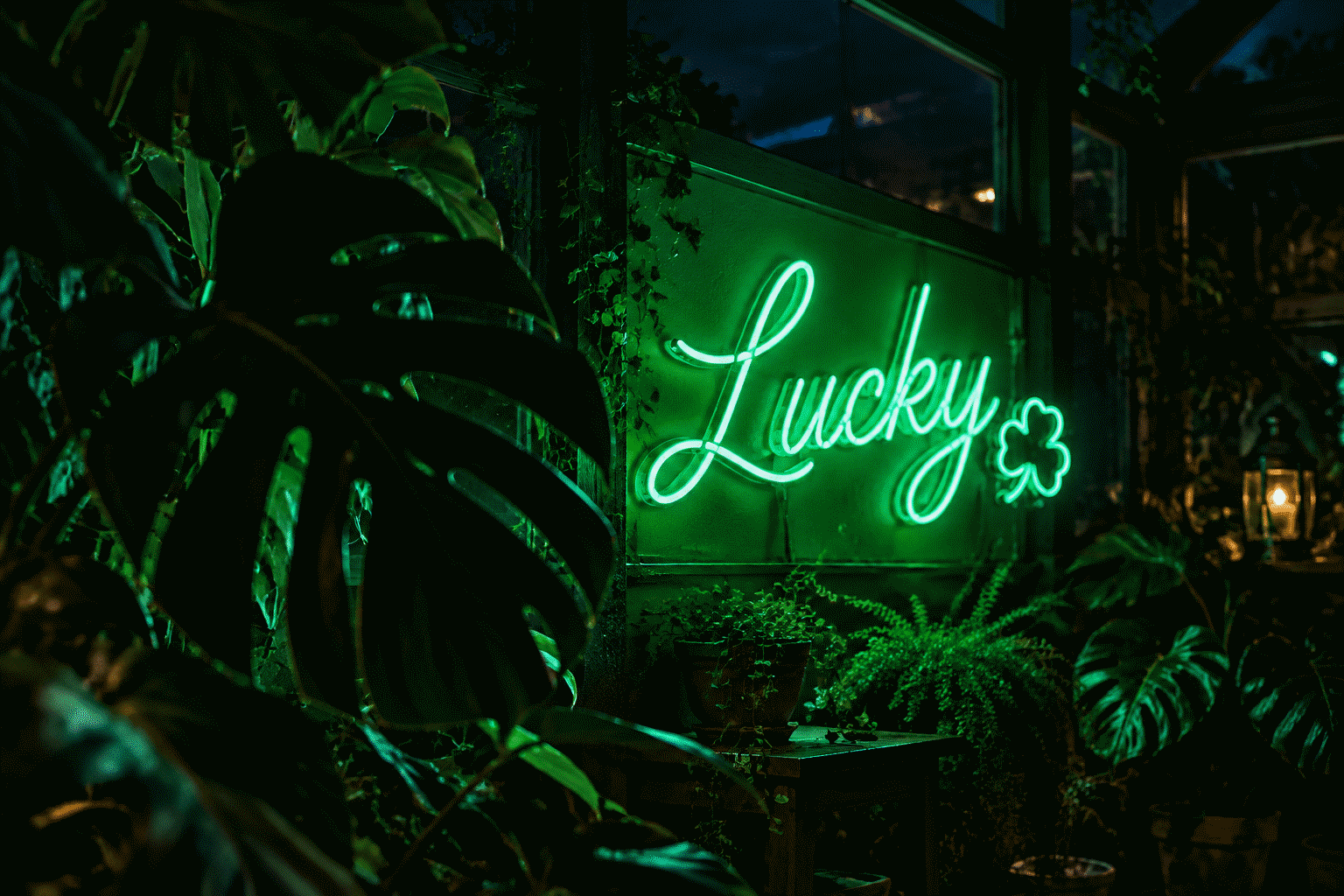
Plant rooms and jungle corners. Green glow among real plants is the double-life aesthetic — the sign and the foliage amplifying each other. Botanical wordmarks and leaf icons carry it (the plant-corner vocabulary).
Kitchens and herb corners. Green’s culinary register: fresh, clean, appetite-adjacent without red’s urgency (kitchen placement) — the diner-green vernacular runs on it.
Home offices and hustle corners. The money register’s home: green wordmarks over desk setups, the work-is-happening glow (office ideas).
Gaming and code aesthetics. The matrix register: terminal green on black walls, the hacker-native glow (gaming color logic).
Garages and workshops. The working-space green: industrial, clean, tool-wall-friendly (man cave adjacency).
The Shade Range
- Emerald green — the rich depth: jewel-register, works against dark walls and brass
- True/kelly green — the all-purpose middle: diner, botanic, and hustle registers equally
- Lime green — the high-energy end: club-ready, tech-forward, the most attention-grabbing green
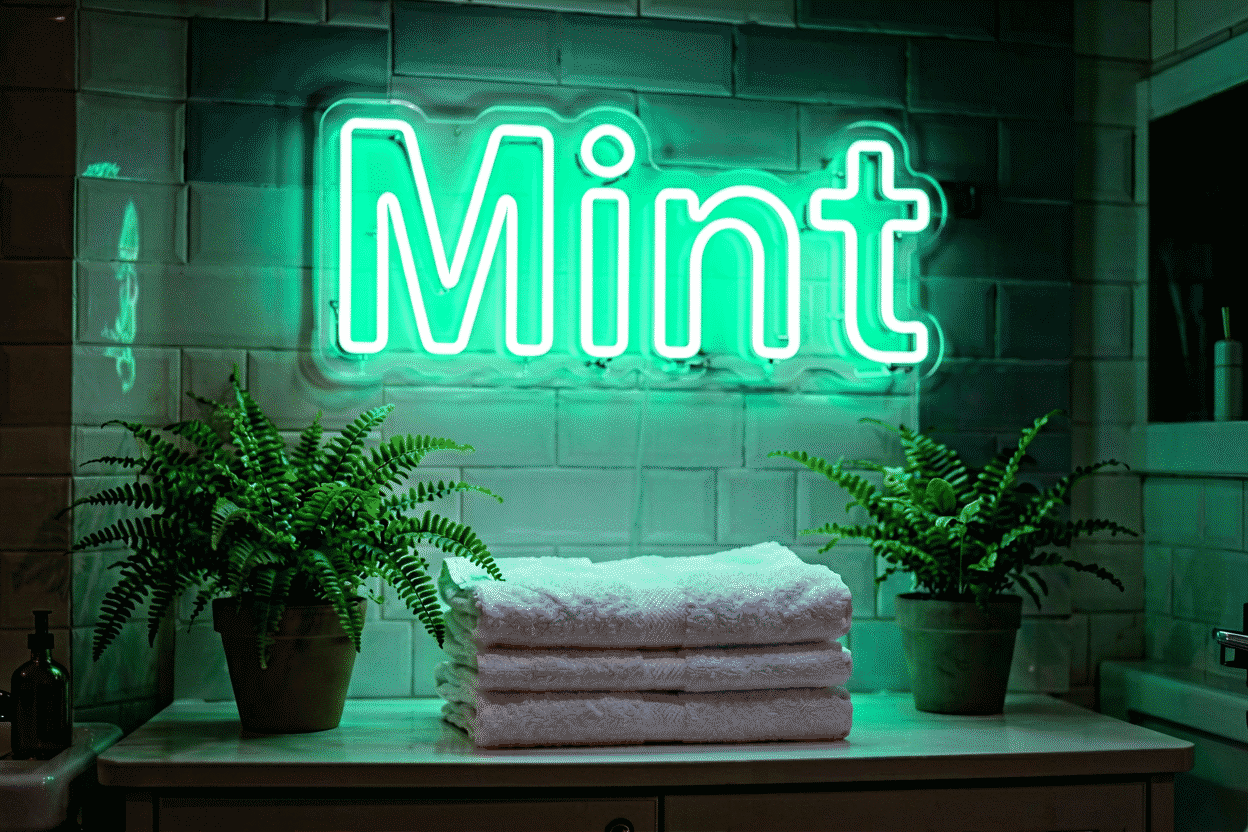
- Mint green — the soft pastel: airy rooms, dessert-shop aesthetics, the daylight-friendly green
Shade-to-register matching is green’s particular game — the same word in lime versus emerald reads as two different rooms entirely.
The Pairings That Work
- Green + plants — the native pairing; glow and foliage (the method)
- Green + white walls — the clean modern look; fresh without coldness
- Green + black — the matrix standard; maximum tech (rules)
- Green + gold/brass — the jewel look; emerald’s natural partner
- Green + pink — the surprise pairing: fresh against sweet, garden-meets-bloom energy
- Green + wood tones — the botanic standard; natural on natural
The full pairing logic: neon color combinations.
The Sign Vocabulary in Green
- Botanical icons: leaves, monstera silhouettes, cacti (the cactus genre)
- Money vocabulary: HUSTLE, GET IT, profit-adjacent scripts
- Terminal/code text: green-on-black wordmarks, the screen-native register
- Herbal and culinary words: kitchen scripts, coffee vocabulary (coffee shop genre)
- Reptile and nature icons: snakes, frogs — the terrarium aesthetic’s icons (the nature guide)
- Gaming vocabulary: the matrix-green register over battlestations

Why Green Photographs So Well
A practical note the aesthetic guides underplay: green neon is among the most camera-reliable glows — saturated enough to hold color on phone sensors, distinct enough from skin tones to flatter rather than tint, and striking against both black walls and foliage backgrounds (the photography method). The plant-corner selfie with green glow is an aesthetic-era archetype for camera-mechanical reasons, not just taste.
Building the Green Room (Order of Operations)
- Pick the register: botanic / money / sci-fi — the word and shade follow
- Audit the plants: if the room has foliage, green amplifies it; if not, decide whether the sign is the plant
- Match shade to wall: white walls want mint or true green; dark walls carry emerald and lime
- Choose icons for botanic, words for hustle, monospace-vibes for sci-fi
- Pair with materials: wood and brass for botanic, black for matrix, white for clean
- Preview shades live in the custom builder — green’s four shades are four different rooms

Galleries: green neon sign for the finished examples; neon room aesthetic ideas for the all-color method.
The Green Worksheet: Register and Room
Green’s three questions, answered in order:
Which register — botanic, money, or sci-fi? The register decides the shade and the format: botanic runs emerald and true greens with leaf icons and plant-adjacent placement (the native pairing); money runs true/kelly greens with wordmarks over desks and garages (the hustle vocabulary); sci-fi runs lime and emerald on black with code text and matrices (the terminal register). The room’s existing objects name the register — plants, spreadsheets, or hardware.
What lives next to the sign? Green’s best neighbors: actual plants (the double-life look), white and pale-wood surfaces (the fresh-clean standard), black walls (the matrix pop), and brass/gold hardware (the jewel pairing — combinations). The test photo: hold a green object against the wall today; if it flatters, the glow will too.
Icon or word? Green runs both exceptionally: its icons (leaves, bolts, cacti, moons in outline) are the palette’s most organic, and its wordmarks carry the money and code registers that demand text. The split decision: rooms with plants want icons (companionship); work rooms want words (vocabulary); content rooms want the lime-on-black statements.
The camera note in green’s favor. Green photographs among the most reliable hues in the palette — saturated on sensors, skin-flattering by contrast, distinct from every human tone (the photography method). The plant-corner selfie and the matrix-stream set-up both run on green’s camera mechanics; if the room’s feed matters, green earns its slot.
The dim plan. Green’s evening register is under-appreciated: emerald at 15% reads like forest night — calm, not neon-loud (the psychology). Plan the low end for living rooms and bedrooms; run full brightness for the hustle and sci-fi registers where energy is the point.
Configure all of it live — shade, format, your words — in the builder, where green’s four shades are four different rooms and the preview shows which one yours is.
FAQ: Green Neon Aesthetics
What does a green neon sign say about a room? Alive and switched-on: green reads fresh (botanic), ambitious (the hustle register), or digital (matrix green) — the only hue carrying nature, money, and sci-fi energies simultaneously.
Is green neon good for bedrooms? In the mint and plant-corner registers, yes — soft green glow among foliage is the fresh-bedroom look. Lime and matrix greens are energizing registers better suited to offices and gaming walls.
What goes well with green neon? Real plants (the native pairing), white walls (clean fresh), black (the matrix standard), gold and brass (the emerald jewel look), pink (the surprise garden-meets-bloom), and wood tones (botanic natural).
What shade of green neon is most popular? True and kelly green as the versatile middles; lime for high-energy rooms; mint for pastel aesthetics; emerald for dark-wall jewel registers — four shades, four rooms.
What are good green neon sign ideas? Botanical icons (leaves, cacti), hustle wordmarks, matrix-green code text, herbal and coffee vocabulary for kitchens, and reptile icons for the terrarium aesthetic.
Does green neon look good with plants? It’s the best combination in the palette — glow and foliage amplify each other into the double-life look, which is why grass-wall and jungle-corner setups default to green (the grass-wall craft).
Green’s summary: the only hue carrying nature, money, and sci-fi in one word-choice, the plant-room’s native glow, the freshest camera register, and the shade family where four greens really are four rooms (pick yours). The green corner done well — glow among foliage, or matrix on black, or hustle over the desk — reads as intentional as any design move in decor, because no other hue says so specifically what a room is for. Name the register, match the shade, and let the room’s own life carry the rest. Does green neon cost more than other colors? No — within custom LED builds, hue pricing runs flat across the standard palette (green prices identically to pink or blue at any maker); the price variables are size, density, RGB capability, and backing, not the specific color (the cost anatomy). Choose green for the room, not the invoice — the shade family costs exactly what the design costs.
Does green neon glow look good in photos? It is among the most camera-reliable hues: saturated on sensors, distinct from skin tones, flattering to foliage and black walls alike — the plant-corner selfie and the matrix-stream frame both run on green’s rendering physics (the method). If the room’s feed matters, green earns its slot on mechanics alone.
Green is the hue that tells you what a room is for before you read a single word on its sign — and the shade you choose is half of that message.
From juice bar to Java code, the hue says alive and switched-on in whatever dialect the room speaks.
Sources & Further Reading
- Neon sign (Wikipedia) — the consolidated public record of neon-sign history and technology.
- Neon, element 10 (Wikipedia) — element properties: density, boiling point, abundance.