Neon Sign Permits and Regulations Explained
Most neon signs need no permit at all: indoor residential signs, temporary event displays, and window signs in most jurisdictions proceed straight from box to wall. Permits enter the picture for outdoor business signage — where sign codes (zoning) and electrical rules apply — and for a few edge cases like historic districts and certain outdoor residential displays. The dividing questions are always the same three: is it outdoors, is it a business sign, and is it wired into the building’s electrical system?
Here’s the decision framework, the three regulatory layers behind it, and the practical process when a permit genuinely applies. One honest caveat throughout: sign codes are municipal — the rules that govern your sign live at your city or county, and this guide is the map, not the law. Always confirm with your local building/sign department before permanent outdoor commercial installation.
The Fast Answer (Three Questions)
- Is the sign indoors at home? → No permit, essentially everywhere. Hang it (how).
- Is it a business sign indoors? (shop wall, window, interior) → Almost always no permit — window signage sometimes regulated by area (a percentage of glass) rather than permission, and landlord/lease approval is the real gate, not the city.
- Is it outdoors or otherwise attached to a business’s exterior? → This is permit country: sign codes and usually electrical permits apply. The layers below.
The temporary carve-out worth knowing: event signage (festivals, grand openings, pop-ups) is commonly exempt or covered by short-term sign permits that event venues and planners handle routinely — the event world runs on this exemption (event logistics).
Layer 1: Sign Codes (Zoning) — The “What and Where”
Every municipality’s sign code governs commercial signage on exteriors, and the knobs it turns are consistent:
- Size — maximum sign area by zoning district and frontage; downtown commercial zones and suburban strips carry different budgets.
- Placement — setbacks, height limits, projection over sidewalks (the right-of-way rules), and lot-line clearances.
- Quantity — how many signs a facade may carry.
- Illumination — whether a sign may be internally illuminated at all in the district (some historic and residential-adjacent zones restrict glowing signage), and if so, how bright.
- Animation and change — static vs. flashing/color-changing; animated signage is the most restricted class (a real consideration for RGB builds on storefronts — the color-changing guide covers the hardware side).
- Design review — historic districts and some design-overlay zones add an aesthetic review board on top of code compliance.
Your tool for this layer is the municipality’s sign code (usually a chapter of the zoning ordinance, increasingly online) and a pre-application conversation with the sign-permit desk — the call that saves weeks. Sign shops and installers in your area know the local code cold; hiring a local sign company means the permit process is part of the service (the B-end channel).
Layer 2: Electrical — The “How It’s Powered”
The second layer applies when signage becomes fixed electrical equipment:
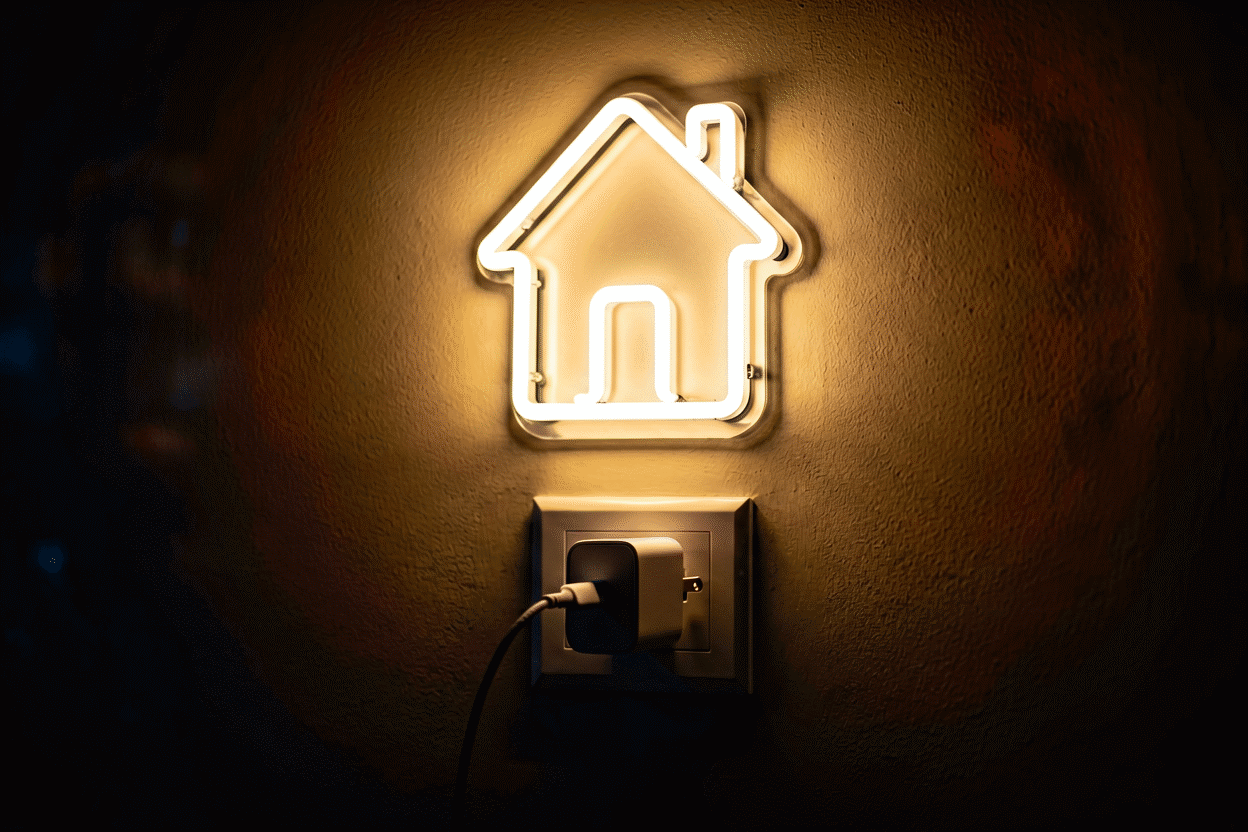
- Plug-in signs (the standard LED neon: adapter into an outlet) generally ride outside electrical-permit territory for interior use — they’re appliances, not installations.
- Hardwired signs (fixed wiring into building circuits — common for storefront glass-neon and large exterior LED) need an electrical permit and a licensed electrician’s work, and inspection before cover.
- Glass neon’s transformers (2,000–15,000 V) always live in the professional-electrical world: certified transformers, proper grounding, clearances — the electrical layer is a genuine part of glass neon’s cost structure (the technology comparison lives in LED vs glass).
- Outdoor anything wants weatherproof-rated installation on GFCI protection regardless of permit status — the safety standard we document in the outdoor guide, and often code-required for exterior circuits.
UL/ETL listing — the certification marks on quality signs and adapters — is the compliance layer you buy at purchase: listed equipment satisfies the electrical inspector before conversations begin. This is one of the quiet reasons to buy certified (quality checks).
Layer 3: Brightness and Light Trespass
Illumination rules increasingly govern output: maximum nits/candelas in districts, shield requirements near residential boundaries, and curfews (required dimming or shutoff hours) in some codes. For LED neon — dimmable by design (the control layer) — compliance here is a settings problem: bright for business hours, dimmed to code for evening. Signs ordered with dimming built in arrive curfew-ready; the smart sign layer automates it entirely.
The Homeowner Situations (Usually Nothing, Occasionally Something)
- Indoor home signs — no permit, any size, any color. The entire residential market runs on this freedom.
- Porch and patio plug-in signs — no permit for a plugged display in the overwhelming majority of jurisdictions; HOA rules are the likelier gate (and a private-contract matter, not municipal law).
- Large permanent exterior home signage (a proper facade installation) — occasional permit territory depending on municipality and attachment method; a call answers it.
- HOA territory — deed restrictions can regulate more than cities do, including front-facing interior window signs. The HOA covenant, not the sign code, is the document to check first in planned communities.

When a Permit Applies: The Process in Five Steps
- Read the sign code (municipal website or planning department) — the district’s size/placement/illumination budget for your address.
- Pre-apply conversation — the permit desk’s five-minute answer to “what would you need from me for a 4×2-foot illuminated wall sign at [address]” is worth two weeks of reading.
- Submit the package — typically: site plan showing placement, sign drawings with dimensions and materials, electrical specs (listed equipment smooths this), and the fee.
- Install per approval — the approved drawing is the permit’s scope; changes want amendments.
- Inspection where required — mostly for hardwired and exterior installations; the electrician schedules it as routine.
Timeline reality: straightforward illuminated-wall-sign permits commonly run one to four weeks; historic-district reviews longer. Budget it into the project calendar (business sign timelines) rather than discovering it at installation day.
Practical Advice, Compressed
- Home and indoor: hang your sign today (the complete guide).
- Business indoor: check the lease and the window-area rule; the city is probably not involved.
- Business outdoor: call the sign desk before ordering — size and illumination ceilings learned early shape the design you order, not shrink it after.
- Buy listed equipment and prefer plug-in LED installations where they fit the need: the compliance-light path by design.
- Local sign companies sell permit-handling as a service — for storefront projects, it’s usually worth it.
Designing within code is still designing: the custom builder sizes signs to spec with dimming and listed power standard — bring your permit’s numbers (max dimensions, brightness class) to the design session and compliance becomes a parameter, not a surprise.
Permit Files: Three Projects Through the Process
The permit path on three real projects:
The café fascia sign (the standard permit). A 4×2-foot illuminated sign for a storefront: the process ran exactly the guide’s five steps — the sign code read first (the district’s cumulative square footage and projection limits shaped the design before it was final (the code layer)), the pre-application call made (five minutes with the permit desk confirming the required documents), the package submitted (site plan, sign drawings with dimensions and illumination specs, the electrical sheet — the UL-listed equipment smoothing the review as predicted), the fee paid, and the permit issued in eighteen days — inside the one-to-four-week band. The install matched the approved drawings; no inspection issues. The file’s verdict: “The permit was the easiest part, because the design worked within it from day one.”
The historic-district boutique (the review case). A shop in a design-review district: the same sign-code layer plus the architectural review board’s aesthetic approval — a two-meeting process adding six weeks (the review timelines). The file’s instructive detail: the board’s first feedback requested a period-appropriate typeface change (the initial modern sans reading “incompatible” for the 1920s streetscape), and the revision — a deco-era script the shop now considers the sign’s best feature. The lesson filed by the owner: “The review felt like bureaucracy until it improved the design; now it feels like free consultation with consequences.”
The home-studio exterior sign (the homeowner case). A resident wanting a sign on their detached studio’s street-facing wall: the determination question (the guide’s three questions) put it in permit territory by attachment, but the call to the municipal desk — the five-minute conversation — established the practical exemption: below the district’s size threshold and non-illuminated-after-hours (the dimming schedule doing compliance work — the curfew layer), the sign qualified as residential decoration, no permit. The file’s lesson: the determination call costs nothing and resolves what an hour of ordinance-reading can’t.
The three files’ shared spine: early conversation beats late discovery. The café designed within code; the boutique let review improve the work; the homeowner’s exemption came from asking. The permit layer rewards the same discipline as the rest of sign ownership — preparation (the complete guide).
FAQ: Neon Sign Permits
Do I need a permit for a neon sign at home? Practically never for indoor residential signs — hang and enjoy. Plug-in porch/patio displays also skip permits almost everywhere; only large permanent exterior home installations occasionally require one, and HOA covenants (private rules) apply ahead of city code in planned communities.
Do business neon signs need permits? Indoor business signage generally doesn’t (lease approval is the real gate; window signage sometimes regulated by glass-area percentage). Exterior business signs do: municipal sign codes govern size, placement, illumination, and quantity, plus electrical permits for hardwired installs.
What is a sign code? The municipal ordinance chapter governing commercial signage — maximum sign area by district, placement and height rules, illumination limits, animation restrictions, and historic-district design review. It’s local law, published by your city or county planning department.
Do illuminated signs need electrical permits? Hardwired signage does — licensed electrician, permit, inspection. Plug-in LED signs (adapter into an outlet) are treated as appliances for interior use and generally ride outside permit territory; outdoor installs want weatherproof, GFCI-protected circuits regardless.
Can my city make me dim or turn off my sign at night? Some codes set brightness limits and curfew hours for illuminated signage, especially near residential zones. Dimmable LED neon makes compliance a settings problem — dimmed to code levels after hours, automated with smart control.
How long does a sign permit take? Straightforward illuminated-wall-sign permits commonly run one to four weeks; historic-district and design-review cases run longer. Confirm with your municipal sign-permit desk before ordering — the code’s size and brightness ceilings should shape the design you buy.
The Permit Question, Answered in Ten Seconds
Home indoors: no permit — hang it today (the fast answer). Business indoors: check the lease and window-area rules; the city almost certainly isn’t involved. Anything on an exterior: the three-layer conversation begins — sign code (size, placement, illumination), electrical (plug-in rides free; hardwired means electrician and permit), and brightness/curfew (dimmable signs comply by settings (the curfew layer)). The process that works every time: read the district’s numbers before designing, call the permit desk before ordering, buy listed equipment always, and let local sign companies carry the paperwork as part of the service when the project justifies it. The regulatory layer rewards the same discipline as everything else in sign ownership — early, boring preparation — and punishes only the surprise.
Sources & Further Reading
- Solid-State Lighting (U.S. Department of Energy) — DOE reference on LED efficacy and lifetime.
- Neon sign (Wikipedia) — the consolidated public record of neon-sign history and technology.
- Mercury (U.S. EPA) — federal guidance on mercury exposure and safe handling.