Rainbow Neon Sign Ideas: Full-Spectrum Glow
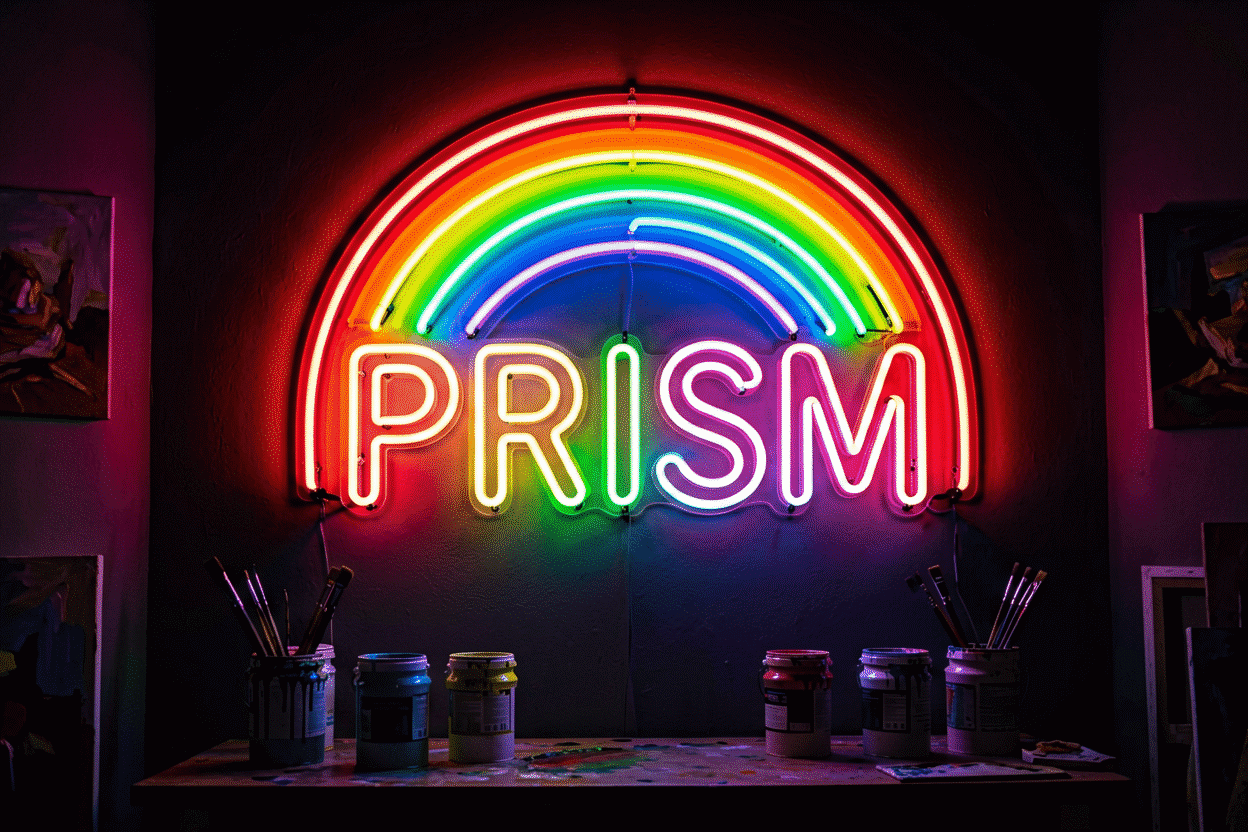
The rainbow is neon’s whole catalog in one piece — every hue the medium makes, arranged in the order nature herself uses. As a sign format it comes in three shapes (the arch, the wave, and the spectrum-word), each with its own vibe, and it owns particular rooms outright: kids’ spaces, pride celebrations, classrooms, and any corner whose whole point is joy. This is the full-spectrum guide — formats, the honest craft of multi-hue design, and the difference between decorative rainbows and the pride flag’s specific six-stripe structure.
The general multi-color decision framework (static vs. RGB, the brightness physics) lives at the multicolor guide; the pairing rules for fewer-hue work at combinations. This page is the rainbow itself.
The Three Rainbow Formats
The arch. The classic: concentric bands (typically 3–7) forming the rainbow shape, optionally with cloud ends. This is kids’-room and nursery native — the format that reads as pure cheer (kids’ setups). Design notes: 5-band arches read best at wall scale (3 bands lose richness, 7 get busy below 24 inches); cloud-ended versions soften the look for younger rooms.
The wave. The spectrum as a flowing sine line — the contemporary format: one continuous band transitioning through hues. Waves suit content walls, music corners, and modern schemes wanting the rainbow’s energy without its cuteness. The gradient transition (vs. discrete bands) is the grown-up version.
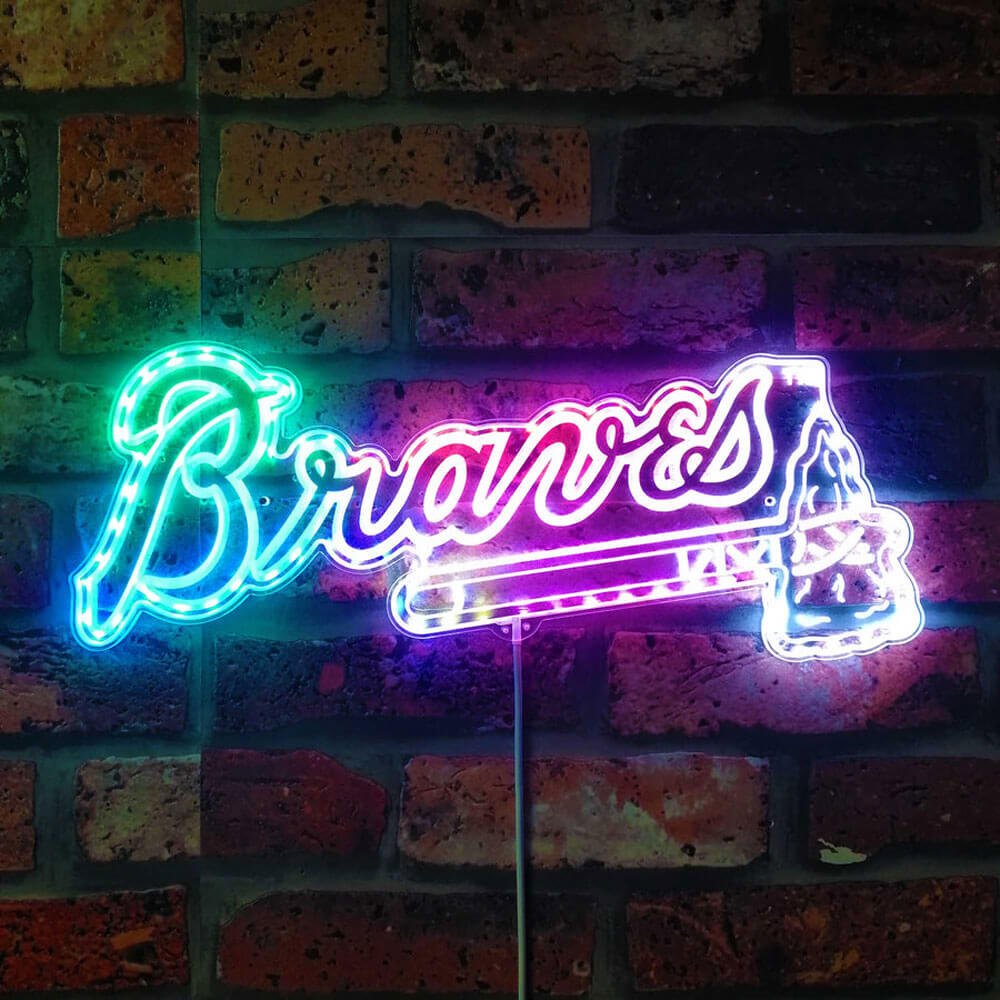
The spectrum word or object. Your word (or a shape — heart, star, lightning) built with different letters or sections in different hues — the “rainbow wordmark.” Works when the word itself is joyful (DREAM, PARTY, a name in a kid’s room); fails when solemn words get rainbowed — the hue arrangement loads meaning (the color-meaning layer).
Rainbow vs. Pride (The Important Distinction)
Two different structures that share a look — worth knowing precisely:
- Decorative rainbows: any band count, any order, ROYGBV-ish, no fixed meaning — arches for nurseries, waves for walls
- The pride flag: six specific stripes (red, orange, yellow, green, blue, violet) with specific meaning (life, healing, sunlight, nature, harmony, spirit) — the deliberate structure, which pride neon renders faithfully
If the sign is for pride — personal or event — build the six-stripe structure with its exact hues (the pride genre); if it’s decor, the freer forms are honest. The overlap is friendly territory — decorative rainbows read as celebration regardless — but precision matters when meaning is the point.
Where Rainbow Neon Wins
Kids’ rooms and nurseries. The arch’s home turf: the cheerful nightlight, the ceiling-corner arc, the playroom statement (kids’ guide). Dimmed low, a rainbow arch is the gentlest possible night-glow — every hue at whisper level.

Pride celebrations and year-round identity. Six-stripe pieces: personal spaces, event decor, storefront support (pride ideas).
Party and event decor. The spectrum’s festive maximum: birthdays (birthday vocabulary), dance floors, festival booths — where multi-color is the theme.
Classrooms and creative spaces. The inclusive-classroom register: rainbow vocabulary (“WELCOME” in spectrum letters, arches over reading corners) — the teacher-decor genre.
Content and music corners. The wave format over setups: spectrum energy without kid-vibes — the YouTuber-and-musician look.
The joy-forward shop. Dessert counters, candy stores, toy retail — rainbow as appetite-for-delight (business color logic).
The Craft of Multi-Hue (Rainbow’s Specific Rules)
Rainbows concentrate all the multicolor physics in one piece:
- Size for hue count: bands need width to read — a 7-band arch under 20 inches muddies; scale up or simplify
- Native hues over RGB for static rainbows (full brightness per band); RGB rainbow signs trade brightness for mode-flexibility (the trade)
- One rainbow per sightline: the spectrum is already maximal — it needs neutral surroundings, not company
- Dimming is the sophistication tool: full-brightness rainbow is a party; 20% rainbow is surprisingly elegant — the soft-spectrum evening look
- White or wood surroundings let it sing; black backgrounds push it psychedelic (contrast rules)
The Sign Vocabulary in Rainbow
- Arches with clouds — the nursery standard
- Spectrum waves — the modern format
- Rainbow wordmarks — joy-vocabulary and names
- Pride six-stripes — the meaningful structure (guide)
- Spectrum hearts and stars — the icon versions
- “Welcome” and classroom words — the educational register
- Sunrise-spectrum gradients — pink-to-orange waves: the softest rainbow variant (combinations)
Building Yours (Order of Operations)
- Name the purpose: kid cheer / pride meaning / party energy / everyday joy — the format follows
- Pick the format: arch (classic), wave (modern), wordmark (personal), or six-stripe (pride)
- Scale honestly for the band count
- Stage neutral surroundings — white, wood, or soft color
- Plan the dim register: the evening 20% spectrum is a secret weapon
- Preview every format on your wall-word in the custom builder — rainbow especially rewards the live render
The Rainbow Sourcing Guide: Formats and Makers
The practical sourcing notes for full-spectrum pieces — what to specify and check:
Band-count and sizing at order. Rainbow physics at purchase: each band wants 2–3 inches of width to read cleanly, so arches scale by arithmetic (5-band arch ≈ 12–16 inches; 7-band ≈ 20+ (the format logic)). Waves tolerate tighter dimensions (no band structure to blur); spectrum wordmarks size to their letter count like any sign (the measurement rules). Specify band counts explicitly — “5-band rainbow arch, 24 inches” orders what you picture.
Native-hue specification. Static rainbows want native-color flex per band (the brightness physics (multicolor guide): mixed RGB bands run dimmer and read patchy). The listing check: bands described as individual colors rather than “RGB rainbow” — the distinction is the sign’s brightness ceiling.
The pride-specification detail. For six-stripe pieces: specify the flag structure and hues at order — makers familiar with pride signage have the palette dialed (the distinction); makers without it need the reference. The rainbow-vs-pride question answered at the spec sheet, not after delivery.
Gradient quality on waves. The wave format’s craft lives in its transitions: quality builds blend smoothly (adjacent hues sharing the transition zone); budget builds step hard (visible color blocks). The preview check — zoom the gradient; the smooth one is the sign you want (the quality checks).
The dim expectation. Full-brightness rainbow is the party register; the underused discovery is rainbow at 15–20% — a soft, surprisingly sophisticated ambient wash (the dimming profiles). Kids’ rooms live at the low end nightly; the same arch that parties at full glows as the gentlest nightlight two steps down.
Order the format — arch, wave, wordmark, or six-stripe — at its honest size, in the builder, where the spectrum renders on your words before it ships.
FAQ: Rainbow Neon
What is a rainbow neon sign? Full-spectrum neon in three formats: the classic arch (concentric bands, the nursery native), the modern wave (gradient spectrum line), or the spectrum wordmark (multi-hue letters) — plus the pride six-stripe structure with its specific meaning.
Are rainbow neon signs good for kids’ rooms? They’re the format’s home turf: the cheerful wall statement by day and — dimmed low — arguably the gentlest nightlight in the medium, every hue at whisper level (kids’ guide).
What’s the difference between a rainbow sign and a pride neon sign? Decorative rainbows are free-form (any bands, any order, celebration meaning); the pride flag is six specific stripes with specific meanings, rendered faithfully when the sign is for pride. Precision matters when the meaning is the point.
Do rainbow neon signs need to be big? Band-width physics says scale with hue count: 7-band arches want 20+ inches; smaller pieces simplify to 3–5 bands or the wave format. The multicolor brightness trade-offs also apply.
Can you get a custom rainbow neon word? Yes — spectrum wordmarks with letters or sections in different hues work for joy-vocabulary and names; solemn words resist rainbow treatment (the hue arrangement loads meaning).
Where do rainbow signs work besides kids’ rooms? Pride spaces, parties and events, classrooms, content and music corners, and joy-forward retail — every register where multi-color energy is the message rather than a design risk.
The rainbow summary: three formats (arch, wave, spectrum-word) serving cheer-pride-party-classroom, the six-stripe pride structure honored precisely when meaning is the point, the band-width sizing arithmetic, and the dimmed spectrum’s secret sophistication (order the spectrum). The rainbow room done right is joy with engineering: sized for its bands, staged against neutrals, dimmed to the soft-spectrum evening register — the palette’s every-color working as one deliberate statement. Can adults use rainbow neon without it reading childish? Yes, by format choice: the wave (gradient, no arch iconography) and the pride six-stripe carry adult registers cleanly, and the dimmed spectrum’s soft ambient wash reads sophisticated in any room (the formats). The arch-with-clouds is the kids’ format by convention; everything else in the genre is age-neutral — joy engineered rather than age-marked.
What size rainbow neon sign should I get? By band math (the sizing): five-band arches read well from 20–30 inches (kids’ rooms, shelves), seven-band statements want 30+ inches of wall, waves scale like any script piece, and spectrum wordmarks size to letter count. Below 18 inches, simplify the band count — the compact rainbow is three to five bands; beyond that, muddiness wins.
Sources & Further Reading
- Neon sign (Wikipedia) — the consolidated public record of neon-sign history and technology.
- Neon, element 10 (Wikipedia) — element properties: density, boiling point, abundance.