Blog
25 Living Room Neon Sign Ideas for the Main Wall
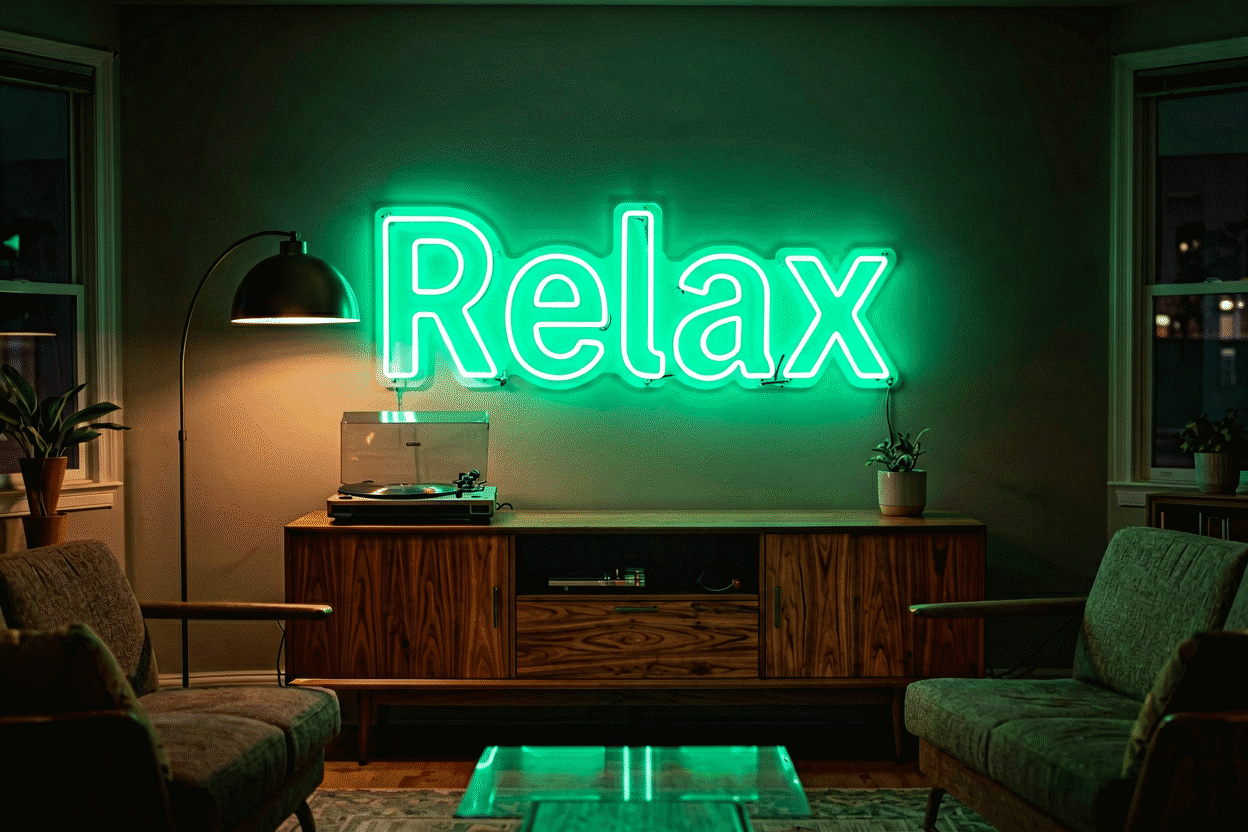
The living room is the hardest room to decorate well and the easiest to under-decorate: it hosts everything (movie night, homework, holidays, the good couch) and answers to everyone. A neon sign solves the room’s central problem — personality without clutter — because it is one object that carries color, light, and point-of-view at once, and at night it does the work of three lamps.
Here are 25 ideas organized by the living room’s zones and registers, from the TV wall to the reading corner, with the placement logic that keeps the main room of the house feeling designed rather than decorated. The full home-decor tier lives at neon signs for home decor.
The Main Wall: Ideas 1–7
The wall the furniture faces — the room’s thesis.
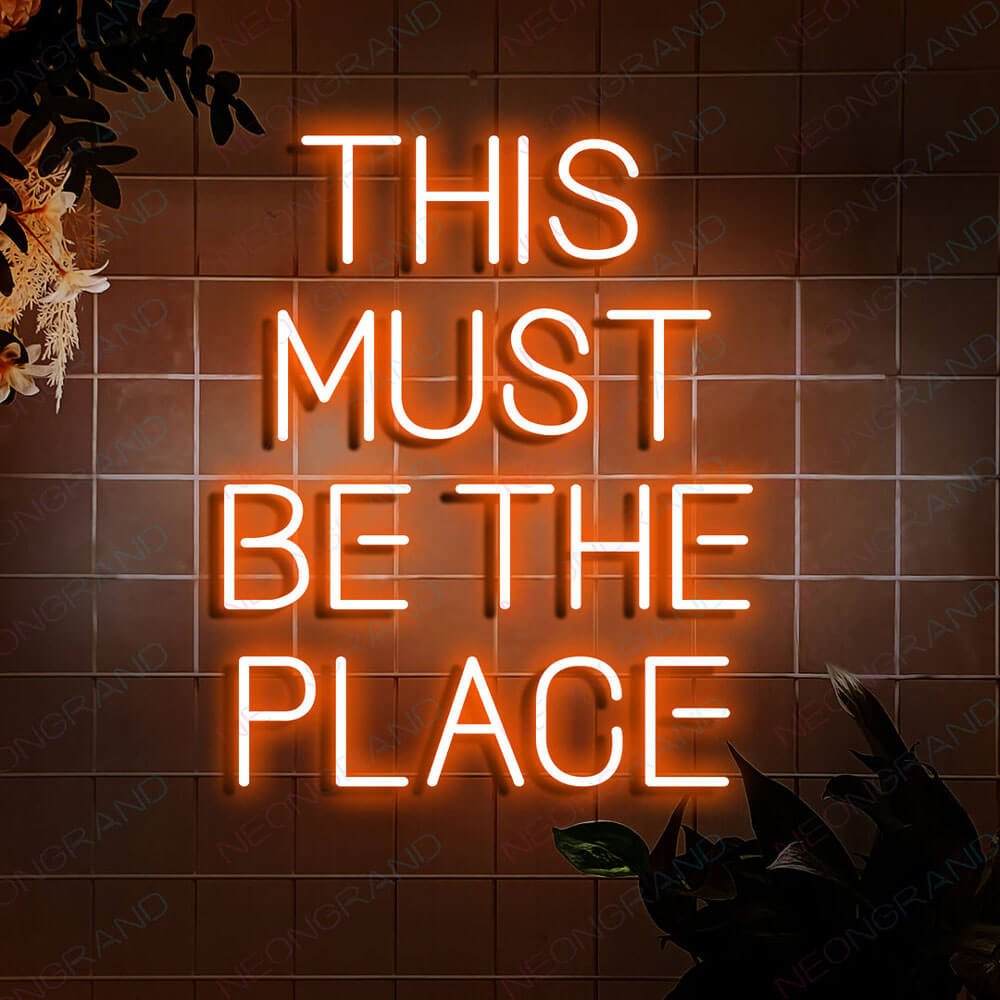
- This Must Be The Place — the living room’s perfect sentence: domestic, warm, and true every single evening. The phrase tier’s most-livable piece.
- Good Vibes — the room’s default blessing; warm white or soft multi, it reads as furniture-adjacent rather than dorm-room when sized generously.
- A sunburst or arc shape — the abstract statement: an oversized warm arc over the sofa carries the wall without a single word (the wall-art tier is this category).
- The family namepiece — “THE [NAMES]” or the shared surname in warm script; the living room’s most classic build (free preview).
- A world-map or skyline piece — the travel household’s statement; glows behind the sofa and ages into the family archive.
- Welcome — on the entry wall, the room’s greeting; strongest in warm white at eye level.
- A gallery-wall anchor — the neon piece as one element in a framed grid: the glow object that makes the whole wall read curated. The wall-decor how-to covers the composition math.
The TV Wall: Ideas 8–11
- The bias-glow piece — a neon strip or small shape behind the TV panel: reduces eye strain in movie hours and looks like set design doing it.
- The media-console accent — a small piece on the shelf below the screen: the console’s lighting without a lamp’s footprint.
- “Movie Night” — the event register; switched on when the popcorn is (the full tier covers the media wall).
- A film-reel or clapperboard shape — the cinema register for the household that takes its movies seriously.
The Reading & Conversation Corners: Ideas 12–16
- “Read” or a book shape — the reading nook’s label and its lamp in one piece; the corner that gets used gets marked.
- A warm-amber arc over the chair — the reading chair’s halo: amber at 40% is the reading register’s exact temperature.
- “Unplug” / “Slow Down” — the anti-screen corner’s motto; the living room’s quiet rebellion in two words.
- A botanical shape — pampas, fern, or leaf outline in green: the plant-corner’s echo (the green register covers the palette).
- The chess-or-game-corner piece — “Game Night” or a pawn shape: the analog zone’s marker.

The Style Registers: Ideas 17–21
- The aesthetic room build — layered pieces (arc + script + shape) in one palette: the look that made living-room neon a category.
- The mid-century piece — 60s starburst or atomic shape in orange and teal: the era room’s authentic accent.
- The minimalist’s single line — one thin-stroke wave or face in warm white: the room that runs one neon and runs it perfectly.
- The boho warm tier — cactus, moon, and earth-tone script: the macrame wall’s electric cousin.
- The gallery-light piece — neon over the art shelf: the collector’s trick that makes framed prints read like a lit installation.
The Seasonal & Functional Tier: Ideas 22–25
- The holiday rotation — the same wall, three pieces: the everyday script, the Christmas tier in December, the party piece for birthdays. One hook system, three registers.
- “Family EST. [year]” — the anniversary register; the wall’s calendar entry.
- The dimmer discipline — living rooms want three brightness levels: full (cleaning, guests), 50% (evening), 25% (movie and late hours). One dial is the room’s whole lighting mood system.
- The corner-uplight swap — replace one floor lamp with a corner neon: the same corner glow, no lampshade silhouette, and the room gains a signature.

Placement Logic for the Main Room
The living room’s neon wants one focal wall — the one the seating faces — and one piece on it, sized to the sofa (a 7-foot sofa carries a 36–48 inch piece; never wider than the furniture below). The secondary zones (reading corner, media console, entry) run small pieces at seated eye level. The most common failure is the opposite: three medium pieces on three walls, each canceling the others’ focal status. The wall-decor how-to covers the full composition math, and the hanging guide handles the drywall anchor work the main wall usually needs.
Brightness and palette run together: warm registers (white, amber, blush) at 30–50% make a living room feel like evening exists; the bold colors belong to the media wall and the party hours. Living rooms photograph best at dusk with the neon at half and one lamp on — the composition every home tour converges on. The bedroom crossover covers the quieter registers if your living room moonlights as one.

The Living Room Budget: Three Working Programs
The minimal program ($100-250): one warm-white phrase or shape, sofa-sized (36-48 inches), hung focal – the room’s single neon voice. The minimal program works when the piece is right: “This Must Be The Place” or the oversized arc, bought at the quality the room’s center deserves. The program fails when the one piece is small, cold-colored, or hung high – the room’s whole neon impression riding one wrong decision.
The layered program ($250-600): the focal piece plus the reading-corner accent and the media-wall glow – the room’s three zones each getting its voice, at descending volumes. The layered program is where most living rooms land and where the composition rules earn their keep: one focal per sightline (the wall-decor method), warm-dominant palette, and the dimmer stack that runs the room’s evening.
The full program ($600-1,200): the seasonal rotation mounts, the gallery-fusion wall, the style pieces that change with the room’s eras – the living room that runs neon as its lighting plan (the wall-lights tier) rather than its decoration. The full program belongs to the households that have decided the room glows, permanently, and budget accordingly.
The program rule: the focal piece is 50-60% of any budget. The room that spends $200 on the focal and $100 on accents reads designed; the room that spends $100 on the focal and $200 on five accents reads cluttered – the ratio IS the composition.
The Evening Protocol and the Photography Hour
The living room’s glow runs the household’s clock: full brightness through the afternoon (the room’s working hours), 50% from six to nine (the conversation register), and 25-30% for the late hours (the room’s best-kept secret – the dimmed glow that makes every living room photograph like a magazine). The dusk hour – the fifteen minutes between daylight and dark – is the room’s photography window: the neon at half, one lamp on, the glow doing its best work. The households that discover this window stop buying lamps and start buying dimmers (the physics covers the wiring).
The reflection audit closes the setup: the TV’s screen, the window’s glass, and the framed art all bounce glow, and each defines an exclusion zone for the bright pieces. The ten-minute walk-through at seated height – looking for the ghosts and the glare bands – is the difference between the room that glows warmly and the room that glares accidentally (the placement guide has the full method).
Variations and Pairings
The living-room canon’s variants. The word-face variants: “living room neon sign ideas,” “neon signs for living room,” and “family room neon sign” serve the tier – the landing face (the hub) carrying the commercial tier, the decor face (the home-decor canon) carrying the room-by-room system. The style faces: the minimalist’s single piece, the aesthetic’s layered system (the aesthetic guide), and the gallery-fusion wall each carry their pairings.
The pairing logic: the living room pairs the statement with the atmosphere – the focal piece (the sentence or shape) with the glow layer (the strips and washes – the wall-lights guide) – the room’s voice and its light on separate systems. The pairings that work run the one-focal discipline with the dimmer stack; the pairings that fail run the two-focal sightline and the full-power evening.
The seasonal pairing: the living room that rotates pairs the permanent anchor with the seasonal accents (the holiday tier for December) – the same mounts serving the year’s calendar, the room refreshed without re-commissioning (the rotation logic).
FAQ About Living Room Neon Signs
What’s the best neon sign for a living room? “This Must Be The Place” or the family namepiece — both are warm, permanent, and specific to the room’s actual job (being home). The phrase tier and the customizer cover both routes.
Is neon too casual for a formal living room? One warm-white piece at 30% is formal now — the register has been in hotels and restaurants for a decade. The casual risk comes from clutter: three joke pieces and a beer sign is a den, and a beautiful one, but it isn’t the formal living room’s answer.
How big should a living room neon sign be? Match the sofa: 36–48 inches for a standard couch wall, 24–30 for a reading nook, small accents for shelves. The sizing logic has the full ratios.
Can a neon sign be the only light in a living room? It can be the only evening light: at 30–40% with one lamp, the room runs its best hours on neon. Task lighting still belongs to lamps — the neon is the mood, not the maintenance crew.
How many neon signs should a living room have? One focal piece plus one or two supports: the statement (the sentence or shape) on the main wall, the accent (the corner or shelf piece) supporting, and the glow layer (the strips) underneath. The living room that runs three working pieces per sightline has reached the ceiling; the room beyond that reads the sign shop rather than the home. The exceptions run by architecture – the open-plan room (two zones, two anchors, both visible from neither’s sightline) and the two-room living space (each room its own focal) – but the base case holds: the living room’s neon succeeds by hierarchy, not accumulation (the composition logic above).
What living room neon color is most popular? Warm white – the register that owns the category’s living-room sales for the same reasons it owns the 2026 street: it flatters every palette, photographs every dusk, and reads calm at the brightnesses the living room actually runs. The accents follow (the blush and amber tiers, the single bold statement in the neutral rooms), and the cool registers serve the specific rooms (the tech-leaning, the gaming-adjacent) rather than the general ones. The popularity’s physics: the living room is the house’s evening room, and the evening’s light is warm – the register that agrees with the room’s hours wins the room’s sales.
Once the main wall is lit, the neighbors are easy: the man cave landing and the gym room landing cover the louder corners of the house, the kitchen landing handles the breakfast bar, and birthday sign ideas cover the once-a-year wall. Hanging questions are answered in the drywall hanging guide and the installation guide, and before you type your own words, the font guide keeps script and block honest at sofa distance.
Sources & Further Reading
- Neon sign (Wikipedia) — the consolidated public record of neon-sign history and technology.
Pricing based on CustomNeon’s current catalog (2026); custom quotes come live from the sign builder.