Blue Neon Sign Aesthetic: Cool Glow Room Ideas
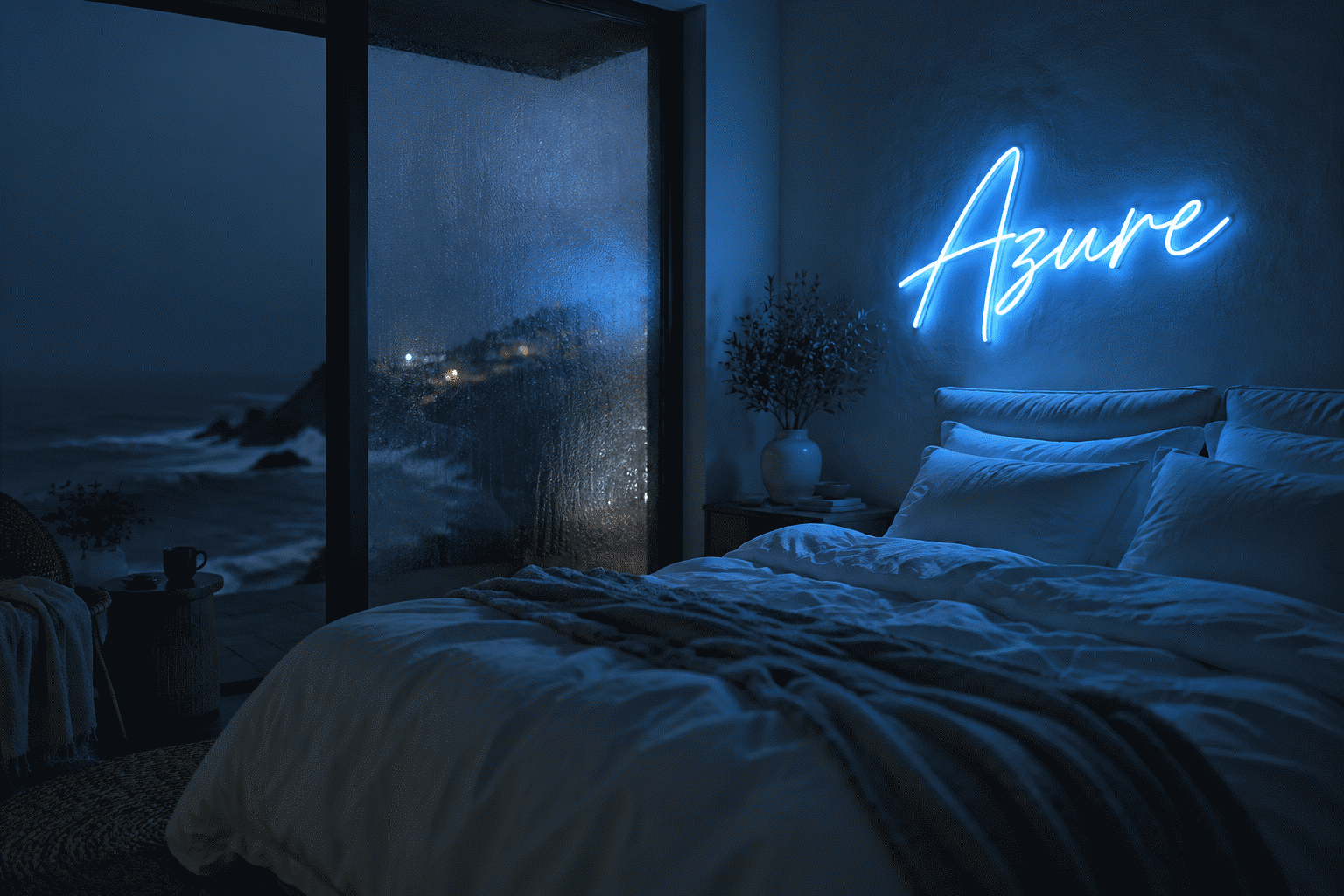
Blue neon is the aesthetic era’s cool register — the glow of late nights, deep focus, and screens-at-2am energy. Where pink flatters and red energizes, blue calms and sharpens: it reads tech-forward without trying, cinematic without warmth, and it owns the gaming setup, the minimalist loft, and the moody bedroom corner more completely than any other hue. A blue neon sign is how a room says this space is switched on — and stays saying it at 30% dim at midnight.
The physics of where the blue glow comes from lives at what makes neon blue; this page is the aesthetic playbook: what blue does to rooms and moods, where it wins, what it pairs with, and the sign vocabulary that carries it. The shade-specific deep-dive (ice blue and its cousins) is here.
What Blue Does (The Psychology in Practice)
Blue light carries the strongest time-of-day associations of any glow: dawn-clear, screen-lit, always-awake. Deployed as decor, that reads three ways:
- Tech and precision — the native hue of interfaces, indicators, and the digital world; why gaming walls and streaming setups default to it (the gaming guide)
- Calm with alertness — blue rooms feel composed rather than cozy; the mood is nighttime-city-window, not fireplace
- Cinematic distance — blue photographs cool and moody; it’s the noir-and-synthwave register, the glow that means story rather than invitation
One honest caveat the aesthetic guides skip: blue is also the most alerting wavelength for sleep architecture. In bedrooms, blue neon wants dimming discipline — warm colors for late hours, blue for evening ambiance before the wind-down (the dimming habit).
Where Blue Neon Wins (The Room Matrix)
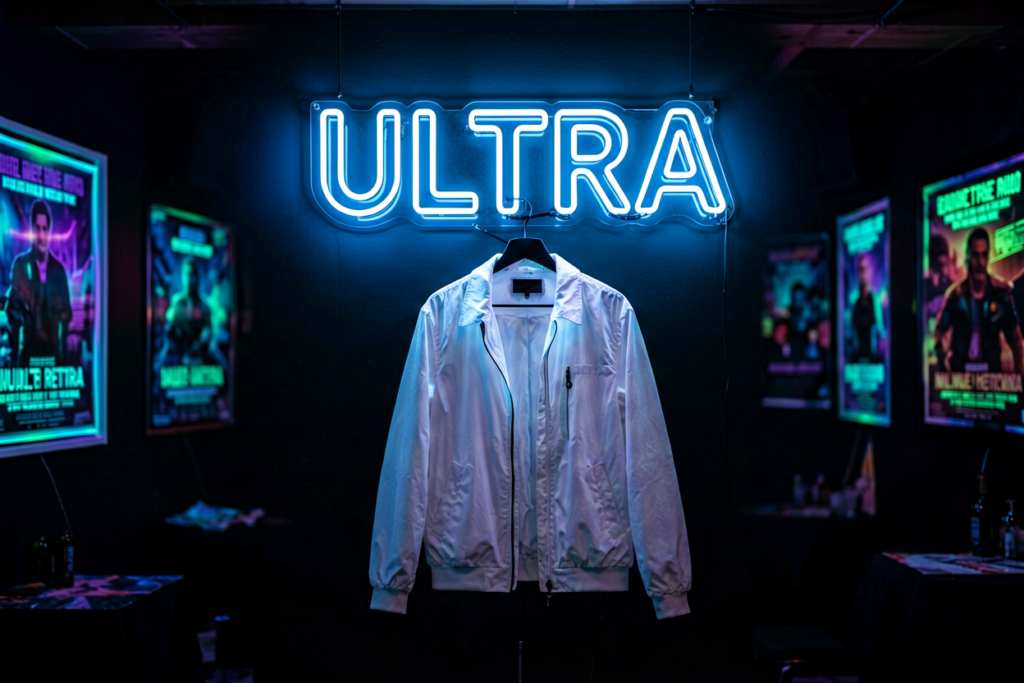
Gaming and streaming setups. The archetype: blue glow plus hardware equals the battlestation look every setup photo chases. Wordmarks (“FOCUS,” gamertags) and icon pieces (bolts, wave lines) in blue carry the genre (setup patterns).
Minimalist and modern bedrooms. Blue against white, gray, or black walls is the clean-room aesthetic — less romantic than pink, more architectural. A single script word over the headboard in cool blue is the minimalist’s version of decor (bedroom placement).
Home offices and creative studios. The focus-room glow: blue’s alert-but-calm register suits desks and edit bays, where it doubles as bias lighting for evening work.
Bars and lounges (the cool register). Where red and amber run the pub vocabulary, blue runs the cocktail-and-neon-geography: speakeasies, tiki corners, music rooms. (The full bar vocabulary.)
Bathrooms and spa corners. The one warm-room exception: blue-glow bathrooms read ice-clean and hotel-luxe — small pieces, dimmed low (rated signs for damp rooms).
The Shade Vocabulary
Blue neon spans a deliberate range — choose the shade with the room, not the listing photo:
- Electric/royal blue — the default: saturated, screen-native, carries gaming and modern rooms
- Ice blue — the pale, airy cousin: softer bedrooms, spa aesthetics, the frozen-lake register (its own guide)
- Deep navy-blue glow — the moody end: pairs with dark walls for the noir look
- Blue-green teals — the crossover shade that borrows green’s freshness (combinations)
What Blue Pairs With
- Blue + white/gray walls — the modern default; the glow supplies the room’s entire color temperature
- Blue + black — maximum contrast, the gaming-noir standard (the black-glow rules)
- Blue + pink — the synthwave sunset gradient; retro energy’s most reliable pair
- Blue + purple — the dreamy night gradient; content-wall favorite
- Blue + warm wood — the tension pairing: cool glow against warm grain reads editorial, not cold

See the pairing logic expanded in the color combinations guide and the palette-level method at neon color palette.
The Sign Vocabulary in Blue
What actually gets made in blue — the formats that carry the aesthetic:
- Wordmarks: FOCUS, CREATE, DREAM (cool register), gamertags, city names
- Icons: lightning bolts, waves, moons, saturn-and-stars — blue’s native icons are the night-sky and energy set
- Japanese/katakana pieces: the cyberpunk register where blue glows hardest
- Outline shapes: skyline lines, sound waves, geometric frames — blue suits line-art pieces because it reads as light-first
- The dim layer: every blue sign should ship dimmable — the midnight 20% blue is a different (and better) aesthetic than full brightness
Working Blue Into Your Room (The Order of Operations)
- Start from the wall color: blue decides its shade against your walls — dark walls carry deep blues, white walls need the saturated electrics
- Pick the register: tech (electric), calm (ice), moody (navy) — the room’s job description picks the shade
- One glow statement per sightline: blue’s power is focus; a single sign reads designed, three competing blues read arcade
- Plan the dim schedule: blue earns its evening setting — dimmed blue at night is the aesthetic; full-blue at midnight is a hazard light
- Preview before committing: every shade renders live against your word choices in the custom builder — see the exact glow before it exists
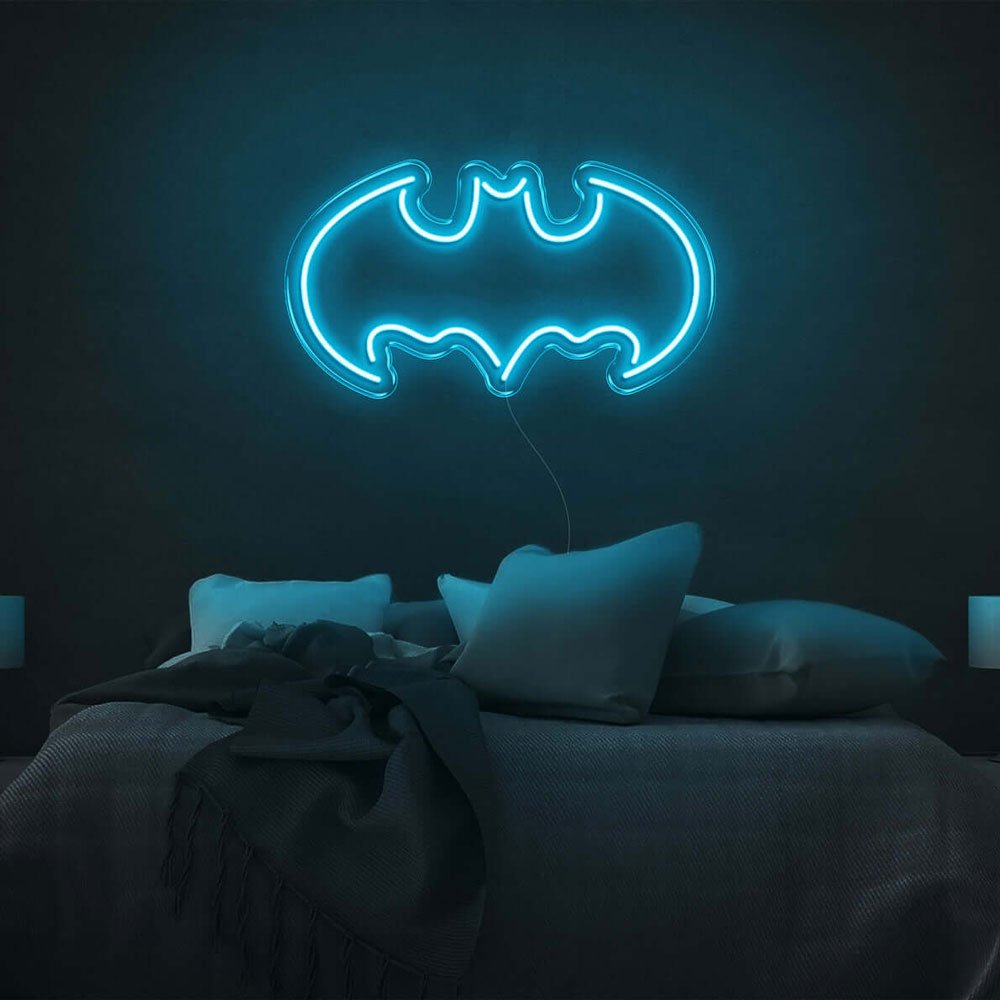
The finished blue rooms — galleries of the aesthetic in every shade and format — start at the blue neon sign collection. And the broader glow-room method (all colors, all rooms) lives at neon room aesthetic ideas.
The Blue Room Workbook: Before You Order
The practical worksheet a blue-neon purchase actually runs on — the questions, in order, with where each answer leads:
Which blue is your room? The four-way shade split decides more than aesthetics: electric/royal for rooms that run dark or tech (the register), ice/pale for airy and spa registers (the pale guide), and the mid-saturated true blues as the versatile middle. Hold your phone’s photos of the room’s wall next to shade swatches in the builder — the same blue reads two ways against charcoal versus white.
What glow temperature does the room already speak? Rooms run warm or cool by their existing lighting; blue signs land best in cool-lit rooms or as deliberate counterpoint in warm ones (the one-glow-per-sightline discipline applies). If the room’s lamps are all 2700K golden, an electric blue needs either the room’s blessing (a deliberate contrast piece) or a warmer alternative (the temperature logic).
What’s the sign’s camera destiny? No camera in the room’s future: any shade works. Streaming, posting, product work: electric and ice blues are the palette’s most camera-reliable hues (the photography notes) — they hold saturation on sensors and grade cinematic without effort. Blue plus black walls is the single most content-proven combination in the medium.
What’s the dim plan? Blue’s two lives — daytime tech-statement and midnight low-glow — both want dimming from day one (the control layer). The underused trick for blue specifically: schedule the evening drop a step lower than instinct (blue at 10% reads like moonlight; at 20%, ambient) and let the sign become the room’s night register (the psychology).
What’s the pairing budget? One blue statement alone works everywhere; a second glow wants the pairing rules — blue-plus-pink for energy rooms (combinations), blue-plus-white for clean minimal, blue-plus-purple for the dream gradient. Two signs maximum per wall; the third glow turns design into arcade.
Five answers, five minutes, and the order configures itself — then renders live in the builder where every blue variant shows on your actual words before anything is paid.
FAQ: Blue Neon Aesthetics
What does a blue neon sign say about a room? Cool, switched-on, and modern — blue reads tech-forward and cinematic: the gaming-wall native hue, the minimalist’s decor register, and the moody-lounge vocabulary. It calms without cozying.
Is blue neon good for bedrooms? Yes for evening ambiance with dimming discipline — blue is the most alerting glow for sleep architecture, so pair it with a dimmer habit (evening blue, warm or low before bed). Ice-blue at 15% is the nightlight register.
What colors go with blue neon signs? White and gray walls (the modern default), black (the gaming-noir maximum contrast), pink (the synthwave sunset), purple (the dreamy gradient), and warm wood (the editorial tension pairing).
What’s the difference between electric blue and ice blue neon? Electric/royal is the saturated screen-native default for gaming and modern rooms; ice blue is the pale airy cousin for spa aesthetics and soft bedrooms. The shade picks the register — both covered in our guides.
What signs look best in blue neon? Wordmarks (FOCUS, gamertags, city names), night-sky and energy icons (moons, bolts, waves), katakana pieces for the cyberpunk register, and outline line-art — blue suits light-first designs that read as drawing.
Does blue neon photograph well? Exceptionally — blue is the most cinematic glow on camera: cool, moody, and content-native. The exposure craft that does it justice is in our neon photography guide.
Blue’s closing summary for the deciding buyer: the tech-native hue with the moody-cool register, four shades from electric to ice each naming a different room, the camera’s favorite wavelength family, and the dimming discipline that turns day-statement into night-ambience — the complete cool-glow decision in one guide (order the shade). The blue room, done deliberately, is the modern interior’s most reliable statement: switched-on by physics, calm by psychology, and fluent in every content format the era runs. Few hue choices repay their workbook the way blue does.
Sources & Further Reading
- Neon: Strong Lines (NIST Physical Reference Data) — the standard reference for neon’s emission wavelengths.
- Neon sign (Wikipedia) — the consolidated public record of neon-sign history and technology.
- Mercury (U.S. EPA) — federal guidance on mercury exposure and safe handling.